Shopping for an officer this holiday season? A vehicle safe is one of the most genuinely useful gifts you can give someone in law enforcement. Off-duty storage is not optional for most departments, and the gear that satisfies policy while surviving daily use is worth getting right.
This guide covers what officers actually need in a personal vehicle safe, why department policy drives the requirements, and which options are built for the job.
Why officers need a personal vehicle safe
An officer's relationship with their firearm does not end at the station door. Off duty, traveling, running errands, picking up kids. The firearm goes where the officer goes, and there are constant stretches of the day when it has to stay in a personal vehicle. Court buildings, schools, private businesses, and plenty of other places do not allow carry inside.

That creates a daily storage problem. The firearm needs to be locked up, out of sight, and secured to the vehicle every single time it stays in the car. A glovebox or console does not cut it, and most officers know it. What they need is a safe that handles the routine without adding friction to an already demanding day.
Department policy sets the bar
Most departments have written policies requiring lockable storage for firearms left in personal vehicles. The specifics vary by agency, but the pattern is consistent: the firearm must be in a locked container, secured in a way that prevents unauthorized access, especially where children or the public might encounter it.
California's Penal Code 25140 reflects the same principle in state law, requiring firearms left in unattended vehicles to be secured in a locked container or locked trunk. Other states have similar frameworks. The point is not the statute number. The point is that "locked up" is the legal and professional standard, and a cable-tied box under the seat does not meet it.
Department policies and state laws vary. If you are buying for an officer, the officer is the authority on what their agency requires. When in doubt, ask them. A gift that does not satisfy their department's policy is not much of a gift.

What makes a safe duty-worthy
An officer's vehicle safe gets opened and closed multiple times a day, in all weather, often in a hurry. That is a different workload than a civilian safe that opens twice on weekends. Here is what separates gear that holds up from gear that does not.
Real steel.
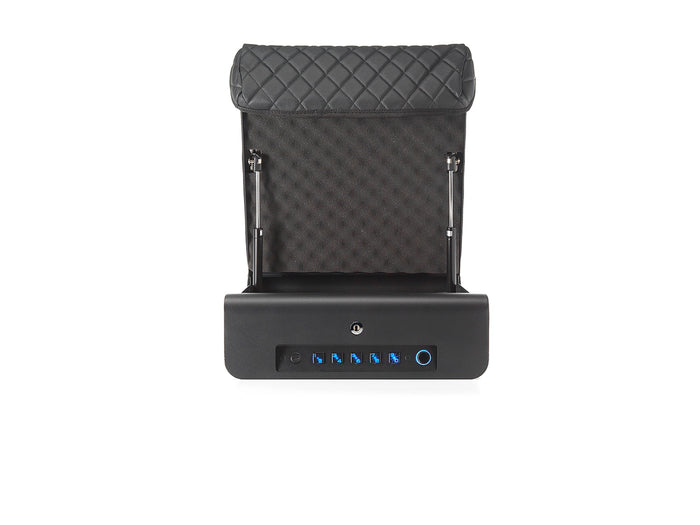
Look for a stated steel gauge, not vague "heavy-duty" language. The BoostedSafe Golden Gate line uses 12-gauge steel, and the Golden Gate Elite is on the California DOJ roster. When a product will not tell you the gauge, that tells you something.
A lock with a backup.
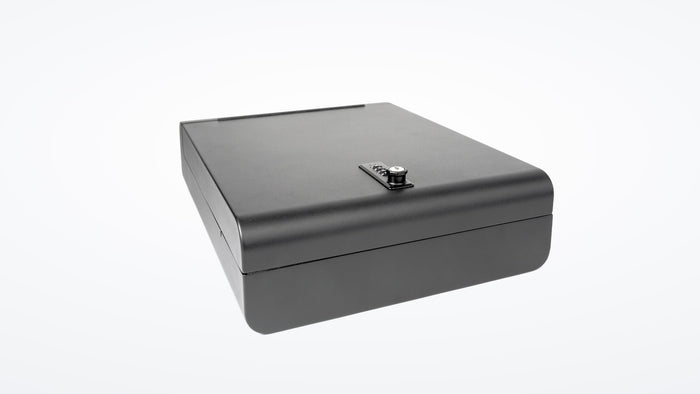
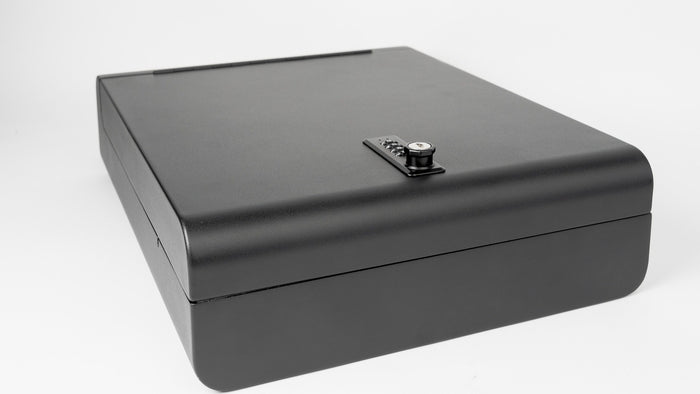
Electronics are convenient until they are not. Any safe an officer depends on daily needs a mechanical fallback: a key, a combination, something that works with dead batteries. Fingerprint plus keypad plus key covers every scenario.
Anchoring that does not quit.
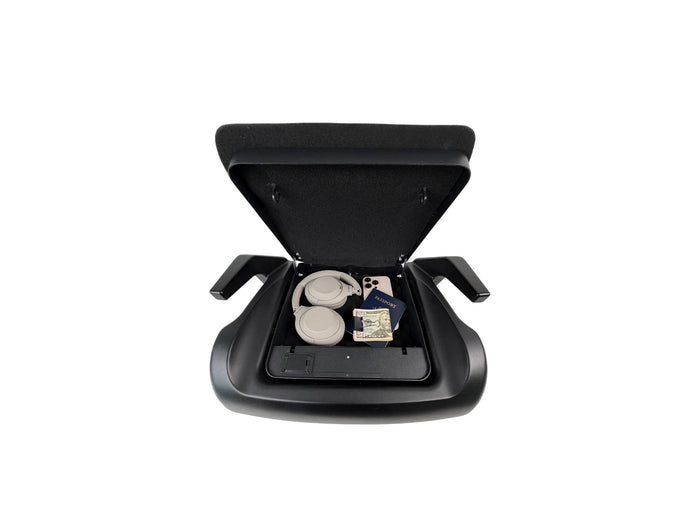
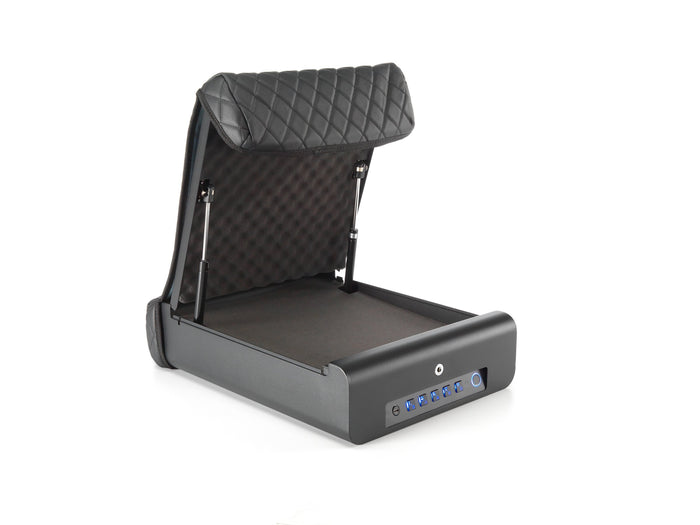
The safe has to stay put through daily use, sudden stops, and everything else a working vehicle goes through. Factory seat-anchor mounting with no drilling holds up without permanent vehicle modification, which matters for a personal car.
Discretion.
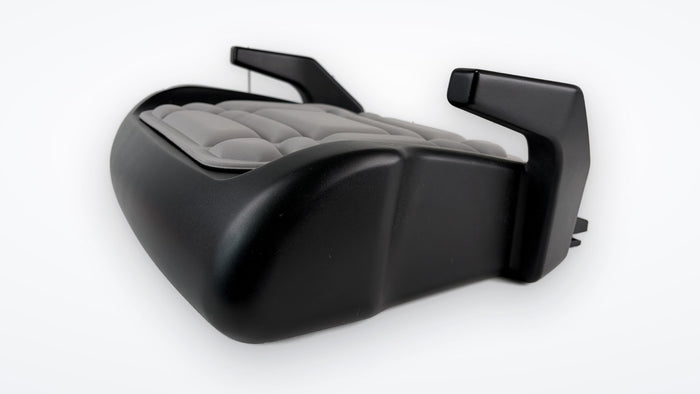
A safe that advertises its contents makes the officer's personal vehicle a target. The disguised-as-a-booster-seat design reads as family gear from the window, which is exactly the point.
The 1311: built with officers in mind
The BoostedSafe 1311, nicknamed "All Cops Are Awesome," was designed around police firearms and the way officers actually store them. It uses 12-gauge steel, a manual combination lock with backup key, and the same seat-anchor mounting as the rest of the lineup. No batteries to die during a shift change, no electronics to fail in extreme heat or cold.

At $399, it sits in the middle of the lineup. For officers who want biometric speed on top of the heavy steel, the Golden Gate Elite at $499 adds fingerprint and keypad access to the 12-gauge body, and it is on the California DOJ roster. Both are serious tools. The choice comes down to whether the officer prefers the simplicity of a manual combination or the speed of a fingerprint reader for daily access.
Compare the full lineup side by side on our comparison page if you want to see every model against each other before you decide.
Gifting tips
A few practical notes if this is a surprise gift. First, confirm the officer's vehicle will fit the safe. Fit varies by year, make, model, and trim, and our fit guide covers the details. If you are unsure, a gift receipt or a heads-up conversation beats a return.
Second, consider the officer's daily routine. Someone who opens the safe six times a day may appreciate the fingerprint speed of the Golden Gate Elite. Someone who values simplicity and zero maintenance may prefer the manual combination on the 1311. There is no wrong answer, just different workflows.
Third, do not gift a safe and stop there. Pair it with the conversation about where the backup keys live. A safe is only as good as its key discipline, and that is worth saying out loud even to a professional.
Frequently asked questions
What do department policies typically require for vehicle storage?
Policies vary by agency, but most require firearms left in personal vehicles to be in a locked container that prevents unauthorized access. Some specify the type of lock or mounting. The officer receiving the gift is the best source for their agency's exact requirements.
Is the 1311 really designed for police firearms?
Yes. The 1311, nicknamed "All Cops Are Awesome," was built around the storage needs of law enforcement: 12-gauge steel, manual combination with backup key, seat-anchor mounting, and no electronics to maintain. It is made for the daily open-and-close routine of off-duty storage.
What is the difference between the 1311 and the Golden Gate Elite?
Both use 12-gauge steel. The 1311 ($399) uses a manual combination lock with a backup key and no electronics. The Golden Gate Elite ($499) adds fingerprint and keypad access and is on the California DOJ roster. Choose based on whether the officer prefers mechanical simplicity or biometric speed.
Can the safe be installed without modifying the officer's personal car?
Yes. BoostedSafe units mount to the factory rear-seat LATCH or ISOFIX anchors with no drilling and no permanent modification. That matters for a personally owned vehicle that may be traded in later.
How do I know it will fit their vehicle?
Check our fit guide with the year, make, model, and trim of the officer's vehicle. Fit varies across seating layouts, so verify before you buy.
Is a vehicle safe a safe gift to give, legally?
A locking container is not a firearm, so it does not carry the transfer restrictions of gifting an actual gun. Standard retail purchase rules apply. This is general information, not legal advice.
Give them gear that works as hard as they do
The 1311 was built for officers. Twelve-gauge steel, manual combination with backup key, no batteries, no fuss. The Golden Gate Elite adds biometric speed for those who want it.