


Fingerprint locks are the headline feature of the modern car safe. Press a finger, the safe opens in about a second. It feels like the future, and for daily carriers it genuinely changes how often the safe gets used.
But biometrics are also the most misunderstood lock in the category. This post explains how they work, where they fall short, and what to demand before you trust one with your firearm.

How a fingerprint safe lock works
A biometric safe has a small capacitive or optical scanner, similar to a phone's fingerprint reader. During setup you enroll one or more fingers, and the safe stores the fingerprint templates locally on the device. When you press an enrolled finger to the scanner, it compares and releases the lock.
The BoostedSafe Elite stores up to 50 fingerprints, which covers both hands, a spouse, and spares. The Golden Gate Elite pairs the same fingerprint access with 12-gauge steel construction.
Enrollment quality matters more than anything else. Enroll the same finger twice from slightly different angles, keep the scanner clean, and re-enroll if your prints change from manual work. Most "the scanner doesn't recognize me" complaints trace back to a rushed five-second enrollment.
Where biometrics fall short (the honest list)
Power.
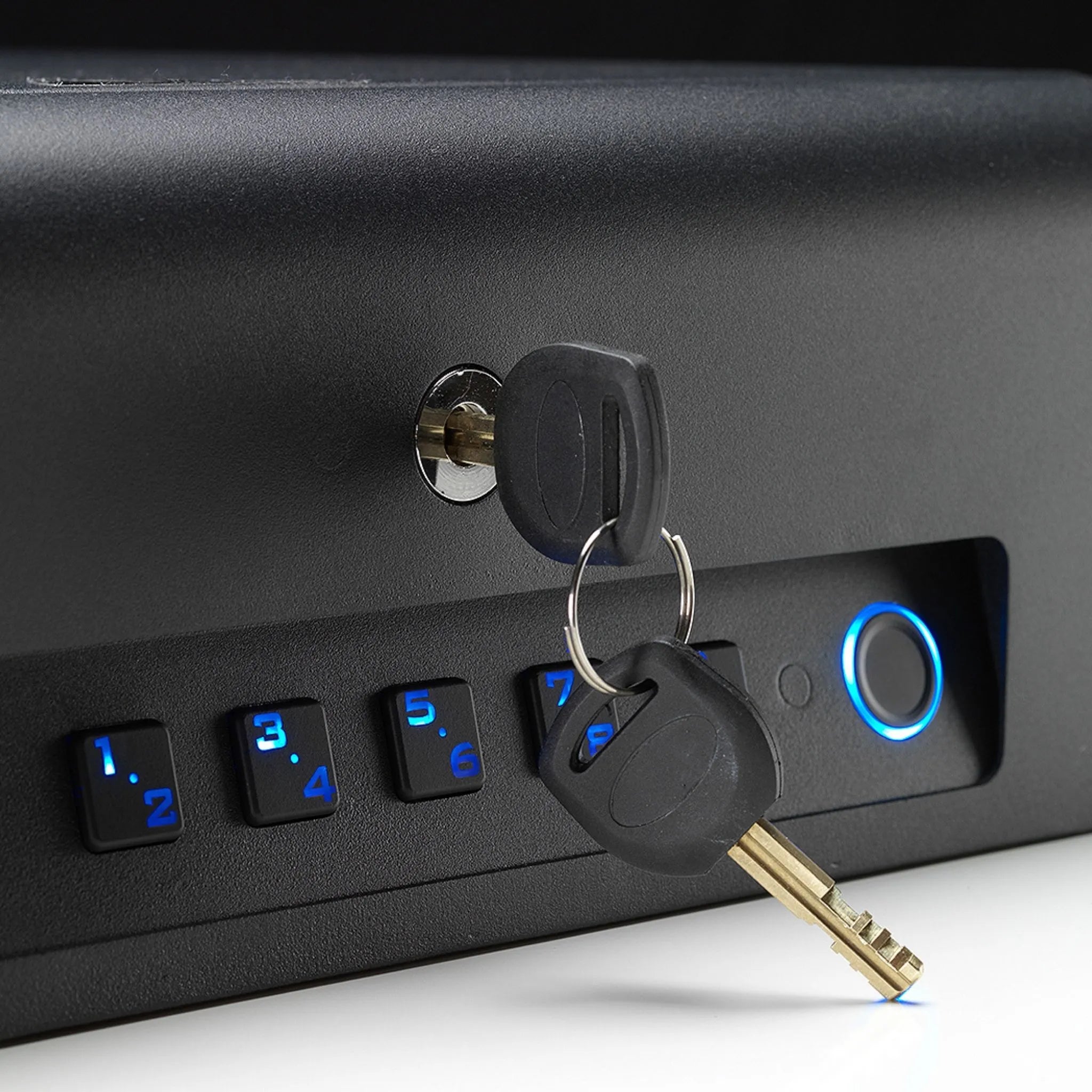
Every electronic lock needs electricity. The Elite runs on 4x AA batteries. If they die and you have no backup, you have a locked box. This is why the Elite also carries a USB-C jump port (power the lock from outside with any USB-C source) and a physical backup key. A biometric safe with no mechanical fallback is incomplete. Full stop.
Wet, dirty, and injured fingers.
Scanners read the fine detail of your print. Water, grease, blood, or a bandaged finger can all degrade the read. If you work with your hands, enroll multiple fingers and keep the keypad code memorized as the backup method.
Cold weather.
Capacitive scanners can get fussier in extreme cold. A vehicle parked outside overnight in January is the exact scenario where the keypad earns its keep.
Shared access complexity.
Enrolling a spouse is easy. Revoking access later (a sold vehicle, a changed household) means deleting the enrollment, which is simple but easy to forget. Keep a list of whose prints are enrolled where.

Note what is not on this list: Hollywood-style fingerprint lifting. Consumer safes are not protecting against movie-plot attacks. They are protecting against smash-and-grab thieves and curious kids, and for those threats the fingerprint lock is fast and effective.
Biometric vs. keypad vs. manual: the quick version
The short version: fingerprint is fastest, keypad is the most conditions-proof, manual combination needs no power at all, and the key is the backup every electronic safe must have.
The strongest setup is not one lock. It is layers: fingerprint for daily speed, keypad for bad-finger days, and a physical key for the day the batteries die. That is exactly the stack on the Elite and Golden Gate Elite.

Battery and maintenance routine
A biometric safe is only as reliable as its power. Build the routine:
- Change the 4x AA batteries on a schedule (pick a date you will remember, like daylight saving time changes), not when the low-battery warning appears.
- Keep the USB-C jump cable somewhere sensible, like the glovebox you no longer trust with the firearm.
- Know where the backup key lives, and make sure your spouse knows too.
- Test the keypad and key twice a year so the backups are familiar, not theoretical.
Our FAQ page covers battery replacement and lock troubleshooting step by step.

Frequently asked questions
Are biometric car safes safe?
Yes, with one condition: the safe must have backup access. Fingerprint plus keypad plus a physical key means a dead battery or a wet finger never locks you out of your own safe.
What happens if the fingerprint scanner fails?
Use the keypad code. If the electronics are fully dead, use the USB-C jump port or the physical backup key. This layered fallback is why we consider a key backup non-negotiable.
How many fingerprints can I store?
The BoostedSafe Elite stores up to 50 fingerprints. Enroll multiple fingers per person and include your spouse if they need access.
Do biometric safes work in winter?
They can be fussier in extreme cold. Keep the keypad code memorized for cold mornings, and the safe remains fully usable.
Is a biometric safe better than a combination safe?
For daily quick access, yes. For a safe that sits untouched for months, a manual combination has no batteries to die and may be the simpler choice. Match the lock to how often you open it.
Will the safe fit my car?
Biometric models fit the same vehicles as the rest of the lineup. Check the Will It Fit My Vehicle guide for your year, make, model, and trim.
The bottom line
Biometric locks earned their place: nothing opens a car safe faster. Just never buy one without a keypad and a physical key behind it, keep the batteries on a schedule, and enroll more than one finger.
If fast access is your priority, start with the BoostedSafe Elite or the Golden Gate Elite, and confirm your vehicle's fit before ordering.
Fast access, done right
If fast access is your priority, start with the Elite or Golden Gate Elite, and confirm your vehicle's fit.


