


A vehicle safe has two jobs that pull in opposite directions: keep everyone else out, and let you in fast. That tension is the whole story of quick-access locks. Fingerprint, keypad, key, and manual combination each solve it differently, and the right answer depends on how you actually use the safe day to day.
Here is an honest breakdown of each, including where each one falls short.
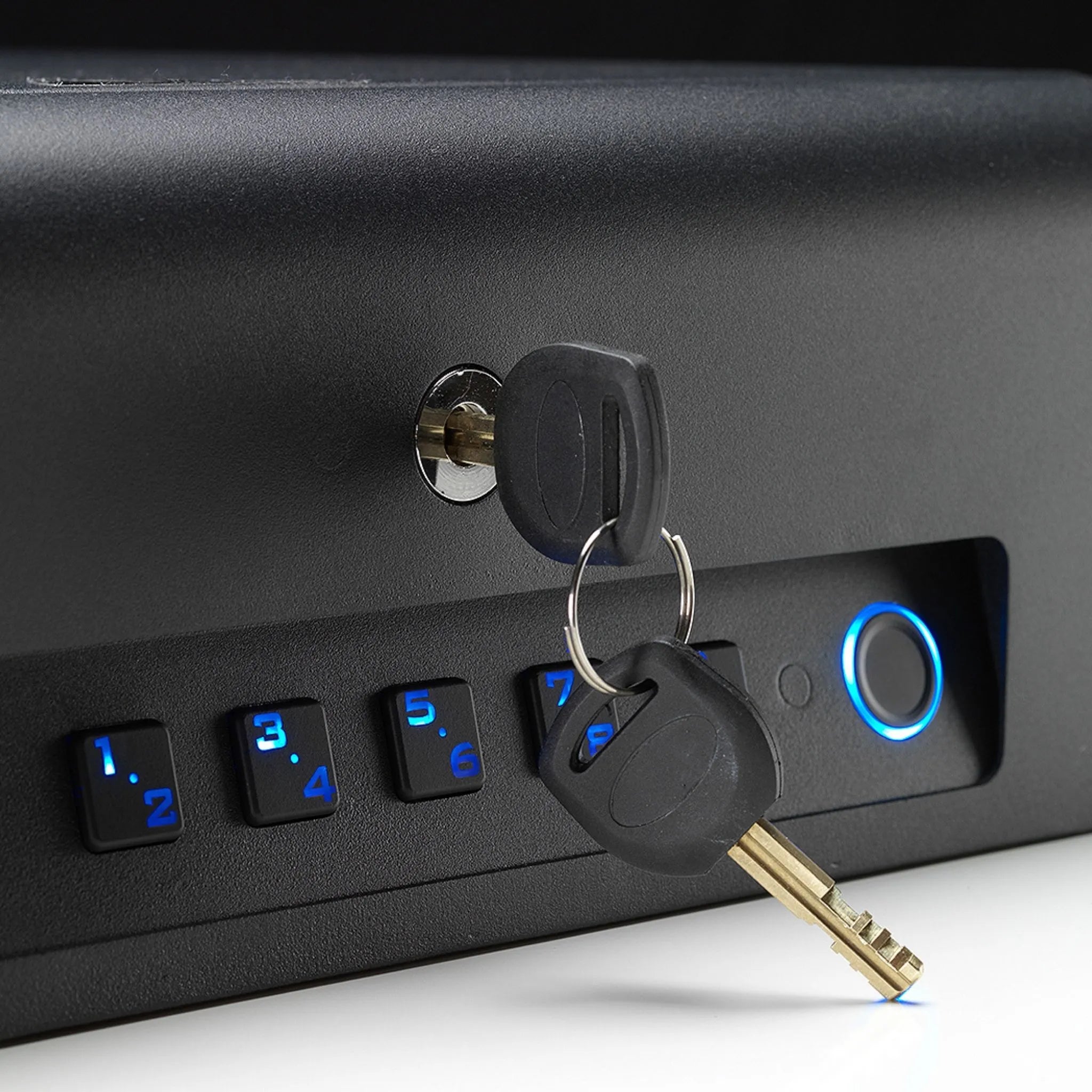
Fingerprint: the fastest option
How it works:
you enroll your fingerprints, then press a finger to the scanner to open the safe. The BoostedSafe Elite stores up to 50 fingerprints and opens in about a second.
Best for:
daily carriers who open the safe multiple times a day. When access speed is the priority, nothing beats pressing a finger.
Honest limitations:
it needs power. The Elite runs on 4x AA batteries, and if they die, you need the USB-C jump port or the backup key. Wet, dirty, or injured fingers can be less reliable at the scanner. Cold weather can also make scanners fussier. This is why every biometric safe worth buying includes a keypad and a physical backup key. A fingerprint-only safe with no mechanical fallback is a gamble.

Keypad: the reliable middle ground
How it works:
enter a PIN code on a digital keypad.
Best for:
shared access and gloved hands. A spouse can know the code without enrolling a fingerprint. It works in the rain, with work gloves on, and with a bandaged finger.
Honest limitations:
you have to remember the code under stress, and there is a small chance of someone watching you enter it. Like fingerprint locks, it needs battery power, so the backup key still matters.

Manual combination: the no-battery workhorse
How it works:
a mechanical combination dial or buttons, no electronics at all. The BoostedSafe Basic pairs a manual combination with a backup key.
Best for:
the truck that sits for weeks, the buyer who distrusts electronics, and anyone who wants zero maintenance. There are no batteries to die and no scanner to misread.
Honest limitations:
it is the slowest option. Dialing a combination in the dark, in a hurry, is nobody's idea of quick access. If fast access is the job, this is the wrong tool.

Key: the backup, not the plan
A physical key is essential as a fallback and poor as a primary lock. Keys get lost, copied, or left in the other jacket. Fumbling for a key under stress defeats the purpose of a quick-access safe. Every BoostedSafe model includes a backup key. None of them relies on the key alone.
How to choose
Ask yourself two questions:
- How often do I open it? Twice a day argues for fingerprint. Twice a month argues for manual combination.
- What happens if the electronics fail? The answer should always be "I use the backup key." If a safe has no mechanical fallback, do not buy it.
Also consider who else needs in. If your spouse needs access, a keypad code or an enrolled fingerprint on the Elite covers it. If the answer is "just me," a manual combination is beautifully simple.

Our FAQ page covers battery life, enrollment, and lock troubleshooting in more detail.
Frequently asked questions
What is the fastest car safe lock?
Fingerprint (biometric) locks are the fastest, typically opening in about a second. Keypads are next, then manual combinations, with key-only locks slowest in practice.
Are fingerprint car safes reliable?
They are reliable as a primary method when the safe also has keypad and key backups. The weak points are dead batteries, wet or dirty fingers, and extreme cold. Buy a safe with a mechanical fallback and these stop being worries.
What happens if the batteries die?
On the BoostedSafe Elite, a USB-C jump port lets you power the lock from outside, and the physical backup key always works. This is why a backup key is non-negotiable on any electronic safe.
Should my spouse have access too?
If you share the vehicle or might need each other to access the safe, yes. Enroll both fingerprints or share the keypad code, and make sure both of you know where the backup key lives.
Is a manual combination safe fast enough for emergencies?
It is slower than fingerprint or keypad. For a safe you open daily, choose electronic access. For occasional-use storage, a manual combination is dependable and maintenance-free.
Do I need to check fit for the lock type I choose?
Lock type does not change fit, but every model still needs to fit your vehicle. Check the Will It Fit My Vehicle guide for your year, make, model, and trim before ordering.
The bottom line
Quick access is not about the fanciest lock. It is about the lock you will actually use, with a backup for the day the batteries die. Match the lock to your routine, insist on a mechanical fallback, and confirm fit.
Compare lock options on the BoostedSafe comparison page, or start with the Elite if fast access is the priority.
Match the lock to your routine
Compare lock options on the comparison page, or start with the Elite if fast access is the priority.


