Cold weather is not one simple storage problem. Moisture, temperature swings, lubrication, batteries, and security all matter.
There is no single temperature number that applies to every firearm, ammunition type, lubricant, electronic lock, or storage setup. The right answer starts with the manufacturers' instructions and a few practical winter habits.

Firearm, ammunition, lubricant, battery, and safe manufacturers publish product-specific instructions. Do not rely on one online temperature threshold as if it applies to every product.
The short answer.
One of the most practical winter concerns is not simply cold. It is what happens when equipment moves between cold and warm environments.
Cold metal brought into warmer, humid air can collect moisture. If that moisture remains on metal surfaces or becomes trapped inside foam or a closed case, it can contribute to corrosion over time.
That is why the better question is not, "Is my car too cold for my firearm?" It is, "What happens when this equipment keeps moving through temperature changes?"

Inspect for moisture, let equipment equalize safely, and follow the firearm manufacturer's cleaning and corrosion-prevention guidance.
Metal, lubricant, ammunition, and batteries.
Metal and moisture.
Metal itself is not the whole issue. Moisture that forms during temperature changes is the part worth monitoring. Inspect the firearm and stored equipment after major temperature swings and avoid sealing damp gear inside a closed container.
Lubricants.
Some lubricants change viscosity as temperatures fall. Use products approved for the firearm and the expected environment rather than assuming every lubricant behaves the same way in winter.
Ammunition.
Do not rely on a universal cold-weather threshold. Follow the ammunition manufacturer's storage guidance and keep ammunition dry.
Electronic locks.
Battery performance can change in low temperatures. If your vehicle safe uses electronic access, maintain the batteries and understand the backup-access options before winter weather becomes a problem.

Winter habits that actually help.
- Inspect after a major temperature change. If equipment has moved between a freezing vehicle and a warm indoor environment, check for moisture rather than immediately sealing everything back inside a case.
- Do not trap moisture. If foam or the inside of a case becomes damp, allow it to dry according to the manufacturer's guidance before long-term storage.
- Use the right lubricant. Follow the firearm manufacturer's maintenance instructions and use products suitable for the expected conditions.
- Check equipment that sits for long periods. A firearm or safe left in a vehicle that is driven infrequently can go through repeated temperature cycles without anyone noticing moisture or battery issues.
- Maintain backup access. If the primary access method is electronic, know how the key, keypad, or emergency-power method works before you need it.
Winter does not change the theft problem.
Cold weather adds maintenance considerations, but the basic security problem remains the same all year.
A firearm left loose in a console or glove compartment is still sitting in a predictable place. Earlier darkness, holiday travel, and more visible cargo can also make parked vehicles more interesting to someone looking for an easy target.
Keep the vehicle locked. Keep valuables out of sight. When a firearm must lawfully remain in the vehicle temporarily, store it unloaded and use a locked container attached as designed.

Where Boosted Safe fits.
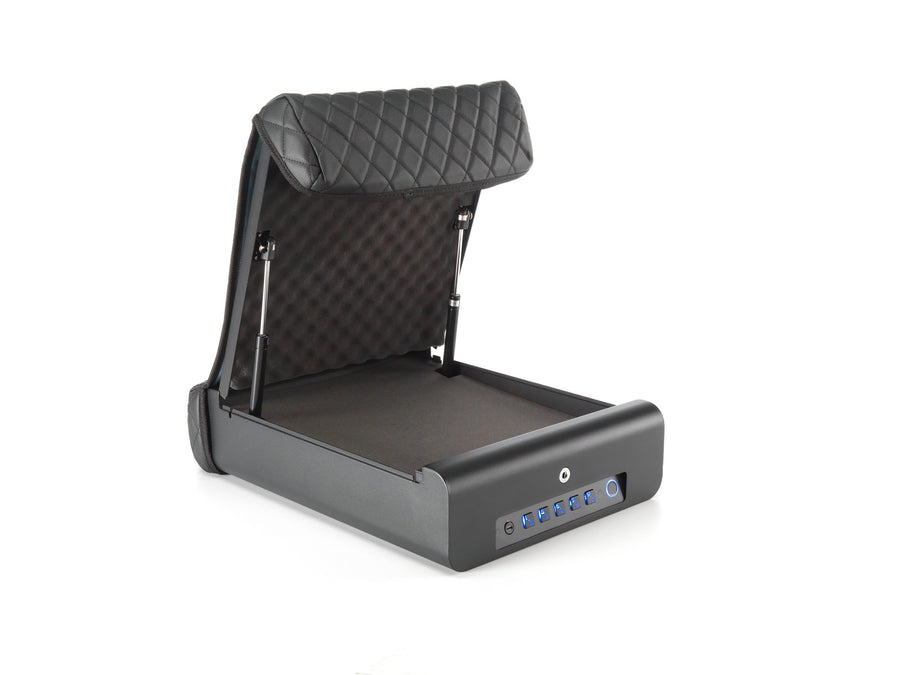
The Boosted Safe Elite is a full-size 16-gauge steel vehicle safe designed to connect to compatible child-seat anchors in the rear of the vehicle.
The Elite opens by fingerprint, keypad, or key and includes an emergency-power option. The safe itself does not regulate temperature or humidity, so the same winter maintenance habits still apply to anything stored inside.
The point of the design is security, not climate control: conceal the safe, lock the contents, and attach the enclosure to the vehicle instead of leaving a portable box loose inside the cabin.
No safe is theft-proof and we will never say otherwise.
Fit varies by year, make, model, trim, and seating position. Before choosing a model, check vehicle fit .

Winter decision guide.
Before winter sets in.
- Read the firearm manufacturer's storage and maintenance instructions.
- Review the ammunition manufacturer's storage guidance.
- Use lubricant suited to the expected conditions.
- Inspect for condensation after major temperature changes.
- Dry the safe interior and foam if moisture appears.
- Store firearms unloaded.
- Maintain electronic-lock batteries.
- Learn backup access before you need it.
- Do not treat a glove compartment as your only security layer.
- Minimize unattended vehicle storage whenever practical.

Helpful links before you choose a setup.
Compare the Mini, Boosted Safe, and Golden Gate product families.
Compare Boosted Safe modelsConfirm seating position, dimensions, and child-seat anchor access.
Check vehicle fitCompare fit, construction, access, attachment, and everyday use.
Read the buyer checklistReview the main storage categories and buyer tradeoffs.
Read the 2026 guideFrequently asked questions.
Does cold weather automatically damage a firearm?
There is no universal answer for every firearm, material, finish, lubricant, or storage duration. Follow the manufacturer's instructions and inspect equipment after major temperature changes.
Why is condensation a concern?
Cold metal moving into warmer humid air can collect moisture. If that moisture remains on surfaces or becomes trapped in foam or a closed case, it can contribute to corrosion.
Can firearm lubricant thicken in the cold?
Some lubricants change viscosity as temperature changes. Use the lubricant and maintenance guidance specified by the firearm manufacturer.
Is ammunition safe at any cold temperature?
Do not rely on one universal temperature threshold. Follow the ammunition manufacturer's storage instructions and keep ammunition dry.
Can an electronic safe be affected by cold weather?
Battery performance can change in low temperatures. Maintain the batteries and know the available backup-access methods.
Does Boosted Safe control temperature or humidity?
No. Boosted Safe is a locked vehicle-storage product, not a climate-controlled enclosure.
Is a glove compartment enough for winter firearm storage?
Cold weather does not make a factory compartment a dedicated safe. Storage requirements vary by jurisdiction, and a glove compartment does not provide the same attachment or construction as a purpose-built vehicle safe.
Cold changes maintenance. Not the security rule.
Keep it dry. Keep it unloaded. Keep it locked. And confirm the storage setup actually fits the vehicle before you rely on it.
Sources and references.
Current product information and access features.
View the EliteConfirm compatibility before choosing an installation position.
Check vehicle fitGeneral firearm safety and security information.
Open sourceThis article is for general informational purposes only and is not legal, maintenance, or manufacturer-specific advice. Firearm, ammunition, lubricant, battery, and storage requirements vary by product and jurisdiction. Follow the current instructions from each manufacturer and all applicable laws.