

A vehicle gun safe should do more than lock. It should fit your vehicle, attach securely, stay discreet, open reliably, and match the legal storage rules where you drive. Here is the buyer checklist to run before choosing one.

Why this checklist matters
A vehicle gun safe is not just a lockbox you toss into the cabin. If a firearm or high-value item has to stay in a car, truck, or SUV, the safe should solve the right problems: visibility, access, removal, fit, and legal storage.
Vehicle break-ins are a real path for stolen firearms. For a closer look at the data, read the BoostedSafe breakdown of ATF and Everytown vehicle theft data.
The takeaway for buyers is simple: a safe needs more than a lock. It needs to be hard to notice, hard to remove, easy for the owner to access, and compatible with the vehicle it will actually live in.
The 8-point checklist
- How it secures to the vehicle
- Lock type and backup access
- Steel construction and build quality
- Concealment and disguise
- Fit for your specific vehicle
- Access speed vs. security balance
- Backup access if power or electronics fail
- Legal fit for your state
1. How it secures to the vehicle
The first question is not the lock. It is how the safe connects to the vehicle.
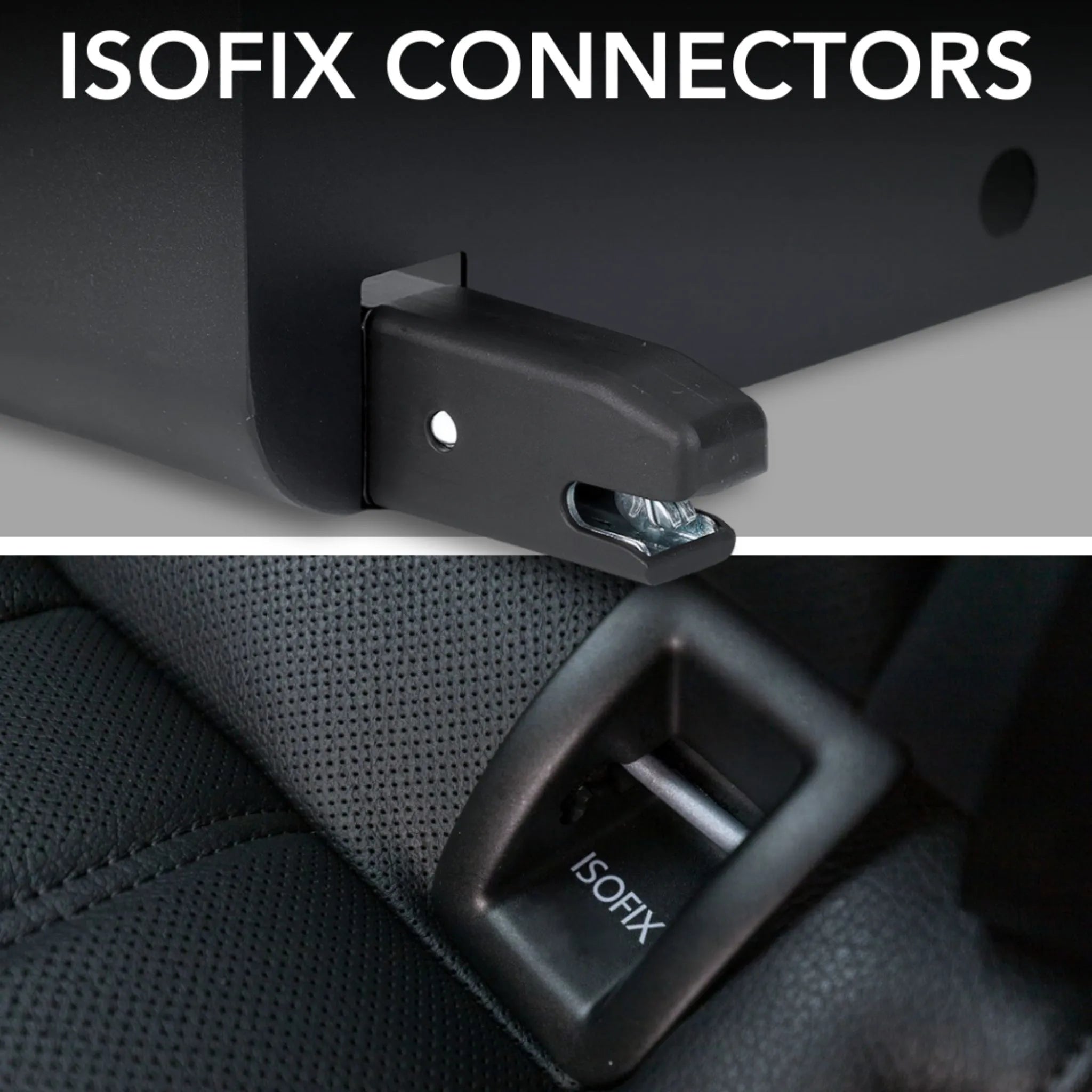
A loose box can still become a removable object. A cable setup depends on the cable, the lock, and what the cable is wrapped around. A safe that connects to compatible rear-seat LATCH or ISOFIX anchor points uses factory anchor locations built into the vehicle.
BoostedSafe Elite and BoostedSafe Basic are designed to connect to compatible rear-seat anchor points. That gives the owner a better storage routine than leaving a safe loose on a seat, under a jacket, or in the footwell.
2. Lock type and backup access
A single access method can become a single point of frustration. Look for a lock setup that gives you a normal daily access method and a clear backup method.
The BoostedSafe Elite uses a keyed disk detainer lock, an electronic combination lock, and a fingerprint sensor that can store up to 50 fingerprints. It also includes a USB-C jump port for backup power.
The BoostedSafe Basic uses a top-mounted combination lock and quick-access key, which keeps the setup mechanical and simple for owners who do not want fingerprint or keypad electronics.

3. Steel construction and build quality
Build quality matters because a vehicle safe has to resist quick, opportunistic access. Steel gauge is one of the few specs buyers can compare directly, so it is worth checking before you buy.
The BoostedSafe Elite product page lists 16-gauge steel construction. It also lists a gas-hinged lid, foam-lined interior, and modular foam insert for storage customization.
For any vehicle safe you are comparing, look for real product specs, not just words like “heavy duty.” If the steel gauge, dimensions, lock type, and mounting method are hard to find, that is worth noting.
4. Concealment and disguise
A safe that is obvious through the window can become a target. Concealment matters because the first step in many vehicle break-ins is simply noticing something worth taking.
BoostedSafe uses a cover designed to resemble a booster seat so the safe blends into the rear-seat area instead of looking like a standard lockbox. That cover is for disguise only. It is not a certified child safety seat and should never be used to seat a child.

5. Fit for your specific vehicle
Most modern passenger vehicles include rear-seat lower anchors, but “most” is not the same as “your vehicle.” Fit depends on year, make, model, trim, seat shape, rear-seat layout, anchor access, and how the safe sits in the seat position.
Federal LATCH requirements support the general model year 2003+ fit language, because lower anchor requirements phased in for vehicles manufactured on or after September 1, 2002. Still, anchor access and seat geometry can vary.
Before you order, use the Will It Fit My Vehicle page instead of assuming based on model year alone.
6. Access speed vs. security balance
The best safe for you is the one you will actually use correctly. If access is too slow or awkward, owners are more likely to skip the safe and use a console, glove box, or bag instead.
Biometric access can be fast once set up correctly, which is why some owners prefer the Elite. A mechanical combination and key setup can be simpler, which is why some owners prefer the Basic.
Do not buy only for features. Buy for the routine you will use every day.
7. Backup access if power or electronics fail
Electronic access is convenient, but backup access matters. Batteries can die. Electronics can be affected by heat. Fingerprints can fail to scan if a finger is wet, dirty, injured, or positioned incorrectly.
That is why the Elite pairs electronic and fingerprint access with a keyed lock and USB-C jump port. The Basic avoids the battery question entirely by using mechanical access.
Whatever safe you choose, ask one simple question: what happens when the primary access method does not work?
8. Legal fit for your state
A safe can improve your storage method, but it does not automatically make storage legal in every state or on every property. Some states have specific rules for unattended vehicles, locked containers, plain view, school property, campus parking, workplace lots, or prohibited locations.
Verify the current requirements where you live and where you travel. If you regularly cross state lines, check each state on the route before relying on one storage routine everywhere.
When the law requires a specific storage method, the product has to match the law. Do not assume any product satisfies every statute without reading the current statute directly.
Elite vs. Basic at a glance
Use this table as a practical feature comparison. Pricing is intentionally left out because sale pricing can change. Always check the live product page before buying.
| Feature | BoostedSafe Elite | BoostedSafe Basic |
|---|---|---|
| Primary access | Fingerprint, electronic combination, and keyed disk detainer lock. | Top-mounted combination lock and quick-access key. |
| Backup power | USB-C jump port for backup power. | Not applicable because the lock system is mechanical. |
| Steel | 16-gauge steel listed on the product page. | Steel gauge not listed on the product page checked. |
| Hinges | Gas-hinged lid. | Gas-powered hinges with auto pop-open assist. |
| Interior | Foam-lined interior with modular cuttable foam insert. | Cuttable foam interior for customization. |
| Vehicle connection | Designed for compatible rear-seat LATCH or ISOFIX anchor points. | Adjustable ISOFIX connection points listed on the product page. |
| Cover | Included cover designed to resemble a booster seat. | Reversible cover designed to help the safe blend in. |
| Dimensions | 15.1 x 13.6 x 4.25 inches listed on the product page. | 17.1 x 13.5 x 4.25 inches shown in product imagery. |
| Best fit | Owners who want biometric access, keypad access, key backup, and USB-C backup power. | Owners who want simple mechanical access without battery-powered electronics. |
How BoostedSafe compares to console-mounted options
Console-mounted safes can be a strong option when the buyer wants a vehicle-specific center-console install. That approach is different from BoostedSafe's rear-seat anchor design.
BoostedSafe attaches to compatible rear-seat LATCH or ISOFIX anchors and is designed to move with you if you change vehicles, assuming the next vehicle is compatible. That makes it a different category than a custom console insert.
For a dedicated side-by-side, read the BoostedSafe vs. Console Vault comparison. For installation guidance, use the vehicle gun safe install walkthrough.
Related BoostedSafe guides
These pages help buyers check fitment, compare safe styles, and understand the bigger vehicle theft problem.
Check rear-seat anchor compatibility before choosing a safe.
Check fitmentCompare top vehicle safe options and use cases.
Read the comparisonUnderstand why vehicle storage matters for stolen-firearm prevention.
Read the data guideBrowse BoostedSafe vehicle storage options.
Shop BoostedSafesOfficial and product sources to check
Use the sources below to verify fitment, federal anchor-system context, and live product details before purchasing.
Federal standard for child restraint anchorage systems.
Read FMVSS 225Laboratory test procedure for FMVSS 225 child seat anchorages.
Read NHTSA procedureLive product page for Elite features, dimensions, and current price.
View EliteLive product page for Basic features, dimensions, and current price.
View BasicFrequently asked questions
Do I need a rifle-sized vehicle safe?
No, not for a handgun. BoostedSafe Elite and BoostedSafe Basic are sized for handguns and small valuables, not long guns.
Will a vehicle gun safe fit any car?
No. Fit depends on the vehicle's rear-seat anchor points, seat shape, trim, and layout. Most modern passenger vehicles have lower anchors, but the actual seating position still needs to be checked. Use the BoostedSafe fitment page before buying.
Is a biometric lock enough on its own?
Backup access is strongly preferred. The BoostedSafe Elite pairs fingerprint access with keypad access, a keyed disk detainer lock, and a USB-C jump port, so the owner is not relying on one access method.
Does the booster seat cover actually work as a booster seat?
No. The cover is designed to help the safe resemble a booster seat visually. It is not a certified child restraint, not a booster seat, and should never be used to seat a child.
How is BoostedSafe different from a console safe?
Console safes are usually vehicle-specific center-console installs. BoostedSafe uses compatible rear-seat LATCH or ISOFIX anchor points, so it is designed around hidden, rear-seat, anchor-based storage instead of a console insert.
Does a safe make vehicle firearm storage automatically legal?
No. A safe can improve the storage method, but compliance depends on the current law where the vehicle is parked. Check your state storage rules and any property-specific rules before relying on any product.
Where should I start if I am still comparing options?
Start with fitment. If the safe does not fit your vehicle correctly, the rest of the features do not matter. Then compare attachment method, lock type, backup access, concealment, steel construction, and legal fit.
Ready to secure your vehicle?
BoostedSafe Elite combines hidden rear-seat storage, multiple access methods, 16-gauge steel, and compatible LATCH or ISOFIX anchor attachment in one vehicle-ready setup.
Sources reviewed: the uploaded BoostedSafe buyer guide brief, FMVSS 225, NHTSA FMVSS 225 laboratory test procedure, live BoostedSafe Elite page, live BoostedSafe Basic page, BoostedSafe fitment page, and related BoostedSafe vehicle storage guides. This article is for general information only and is not legal advice.