

Parked cars are now the number one source of stolen guns in America. That is not a slogan, it is the data, and we wrote up what the numbers show in our breakdown of why parked cars top the list. Most of those thefts are smash-and-grabs that take under a minute. The gun was sitting in a glovebox, a console, or under a seat.
A car gun safe exists for one job: make sure a broken window does not cost you your firearm. This guide walks through how to choose one, what actually matters, and what to skip.

Start with the real threat: the smash-and-grab
Most car break-ins are opportunistic. A thief looks through the window, sees something worth taking, smashes, grabs, and leaves. The whole thing is over before anyone notices.

That shapes everything about choosing a safe. You are not buying a bank vault. You are buying time, noise, and inconvenience for the thief, plus invisibility before the thief ever picks your car. Any product that promises to be "theft-proof" or "unbreakable" is selling fantasy. The honest goal, and the one we design around, is to make theft slower, harder, louder, and less convenient.
The three things that actually matter
Every vehicle safe should be judged on three things, in this order.
1. Concealment.
If it does not look like there is anything worth taking, your car is less likely to be picked at all. A safe that screams "gun inside" from the back seat has already failed its first job. This is why the BoostedSafe line disguises as an ordinary rear-seat booster seat. It reads as kid gear, not a gun safe.
2. Anchoring.
A safe that is not attached to the car is just a locked box a thief can carry away and open later. Look for a real attachment method. BoostedSafe units lock to the vehicle's factory rear-seat LATCH or ISOFIX anchors, the same hard points that hold a child seat, with no drilling and no permanent modification.
3. A real lock.
Concealment lowers the odds of being targeted. The lock buys time and noise if someone tries anyway. More on lock types below.

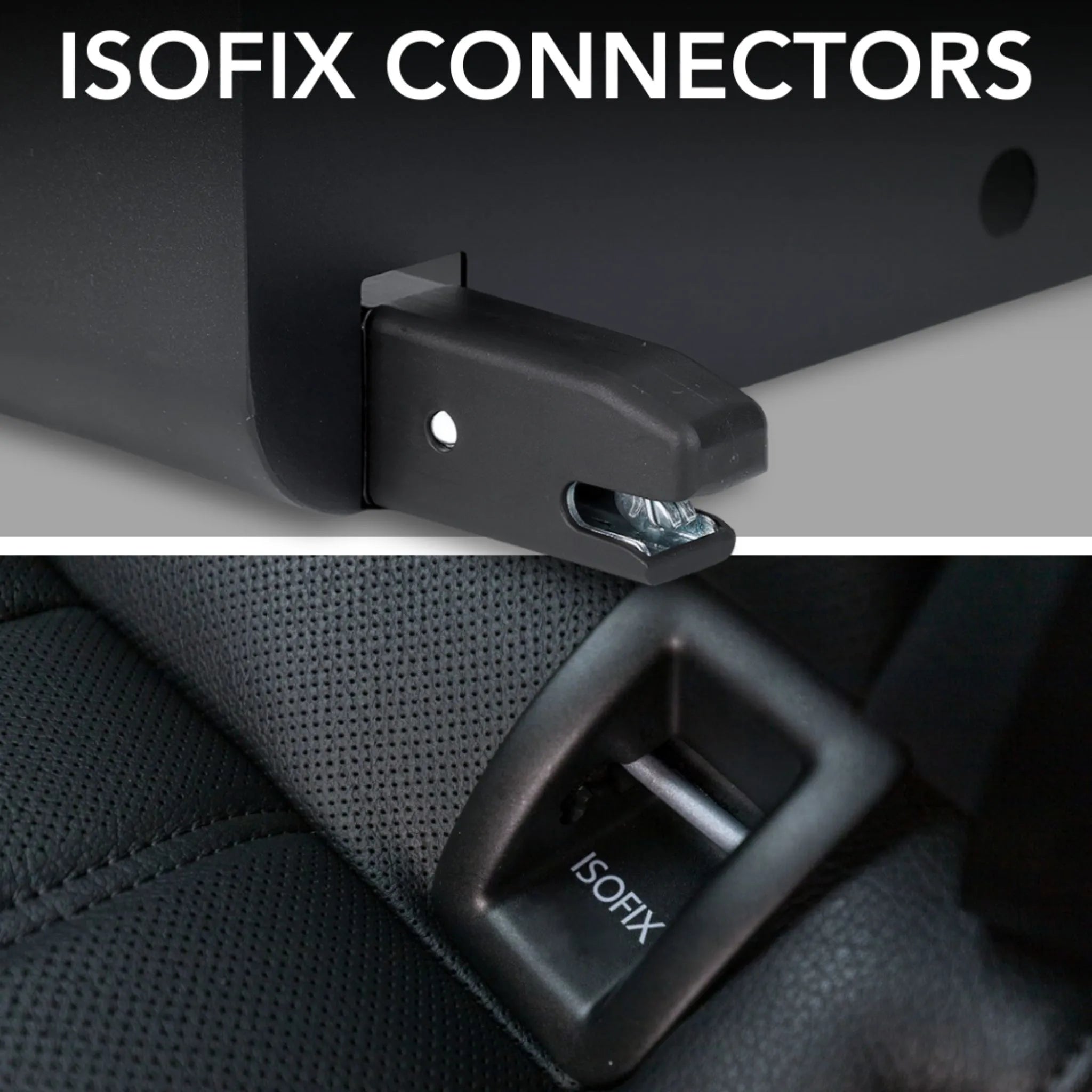
If a product cannot give you a straight answer on all three, keep shopping.
Lock types compared: fingerprint, keypad, key, or combination
Fingerprint (biometric). Fastest access, usually about a second. Good for quick access when seconds count. Downsides: it needs power (the BoostedSafe Elite runs on 4x AA batteries with a USB-C jump port for dead-battery access), and dirty or wet fingers can be less reliable. Always buy a biometric safe that also has a keypad and a physical backup key. Any biometric safe without a mechanical backup is a risk.

Keypad. Fast, no fingerprint enrollment, works with gloves. The code is shareable with a spouse. The tradeoff is memorization and the small chance of someone watching you enter it.
Manual combination. No batteries, no electronics, nothing to fail. The BoostedSafe Basic uses a manual combination plus a backup key at $299. Slower than fingerprint, but dead simple and dependable.
Key only. Fine as a backup, poor as a primary. Keys get lost, and fumbling for a key under stress is exactly what quick access is supposed to avoid.
Our take: match the lock to your life. If this is a daily-carry staging safe you open twice a day, fingerprint earns its keep. If it sits in a truck you drive on weekends, a manual combination is plenty.
Fit: measure twice, buy once
Here is where most buyers get burned. "Universal fit" is a banned phrase in our brand book for a reason: no safe fits every vehicle. Fit varies by year, make, model, trim, and seating layout, especially with folding, sliding, or bench-style rear seats.
Before you buy any car safe:
- Check whether your rear seat has accessible LATCH or ISOFIX anchors (most modern passenger vehicles do, but verify).
- Measure the space where the safe will live.
- Use the manufacturer's fit guide. Ours is the Will It Fit My Vehicle guide, and we would rather you check it and not buy than buy the wrong unit.
Red flags: what to skip
No anchoring method.
A cable alone is better than nothing, but a safe that cannot be secured to the vehicle is a take-home box for thieves.
"Theft-proof" or "unbreakable" claims.
No portable safe is. Honest brands say theft-deterrent or theft-resistant.
No backup access.
Electronics fail. Batteries die. If there is no key or combination fallback, walk away.
Mystery steel.
Look for a stated steel gauge. The BoostedSafe Golden Gate Elite, for example, uses 12-gauge steel and is California DOJ certified. Vague "heavy-duty metal" tells you nothing.
For a deeper dive on whether these products actually work, read do car gun safes actually stop thieves, where we separate the marketing from the mechanics.

Where BoostedSafe fits
We make vehicle safes that anchor to factory seat anchors and disguise as a booster seat. The lineup:
Elite ($399):
fingerprint, keypad, and backup key. The quick-access flagship.
Basic ($299):
manual combination and key. Same disguise and anchoring, no electronics.
Golden Gate Elite ($499):
12-gauge steel, fingerprint/keypad/key, California DOJ certified.
Golden Gate Basic 1311 ($399):
12-gauge steel, manual combination and key, built with LATCH/ISOFIX anchoring.
Compare them side by side on the BoostedSafe comparison page, then confirm fit for your specific vehicle.
Frequently asked questions
Do I really need a car gun safe?
If you ever leave a firearm in a parked car, yes. Gloveboxes and consoles are the first places thieves check, and parked cars are the top source of stolen guns. A safe does not make theft impossible, but it moves you out of the easy-target category.
Will a car safe fit my vehicle?
It depends on year, make, model, trim, and seating layout. Check the manufacturer's fit guide before ordering. For BoostedSafe, that is the Will It Fit My Vehicle guide.
Is a fingerprint safe better than a keypad safe?
Fingerprint is faster; keypad works with gloves and needs no enrollment. The best answer is a safe that offers both plus a physical key backup, so you are covered if the electronics ever fail.
Can I install a car gun safe myself?
If it anchors to factory LATCH or ISOFIX points, yes, it is a minutes-long install with no drilling. Bolt-down console safes are a different story and often need professional installation.
Is it legal to keep a gun locked in my car?
Laws vary by state and sometimes by city, and some states have specific rules about unattended firearms in vehicles. Our locked container guide covers the general concepts, but confirm the rules where you live and travel. This article is for general information only and is not legal advice.
What about storing the gun in the trunk?
A trunk is better than a glovebox, but it is still one of the first places a thief checks, and many trunks can be popped from inside the cabin. A locked, anchored safe in the passenger compartment is the stronger setup.
The bottom line
The best car gun safe is the one that is concealed, anchored, and locked, fits your specific vehicle, and opens fast enough that you will actually use it. Start with those criteria, check fit before you buy, and skip anything that promises the impossible.
Ready to compare? See the BoostedSafe lineup side by side and check your vehicle's fit before you decide.
Ready to compare?
Start with concealment, anchoring, and lock type. Compare the BoostedSafe lineup side by side, then check your vehicle's fit before you decide.