

A vehicle gun safe is only useful when its shape, attachment method, lock, and access pattern fit the vehicle and the way you actually use it. This guide compares four common categories without pretending that one design wins every situation.

The four common types of car gun safes
The label “car gun safe” covers products with very different installation requirements. A flat steel box under a seat is not used the same way as a console insert. A headrest replacement changes part of the vehicle interior. A booster-disguise safe uses the rear-seat environment to blend in. Understanding those differences is more useful than comparing lock features alone.
1. Under-seat lockboxes
Under-seat models are usually low-profile boxes designed to slide beneath a front or rear seat. Some use a cable looped around a seat frame or another fixed component. Others use brackets or vehicle-specific hardware. Their main appeal is simple: the container may be hidden from a casual glance while preserving the rest of the cabin.
The tradeoff is clearance. Power-seat motors, wiring, floor vents, seat travel, and uneven carpeting can eliminate the space a product photo appears to promise. Access can also become awkward when the seat must be moved or when a cable lets the box shift. Do not assume that “under-seat” means universal fit or tool-free installation.

2. Center-console safes
Console safes install inside the factory center console. Many are shaped for a specific make, model, trim, and model-year range. When properly matched, the factory console hides the locking enclosure and the driver can often reach it without leaving the seat.
The drawbacks are compatibility and capacity. A fitted insert may not transfer to a replacement vehicle, and it consumes console storage. The original console lid is also not the security layer. The important components are the enclosure, locking mechanism, and installation hardware inside it. Manufacturer fitment tools, such as the one offered by Console Vault, illustrate how specific these products can be.

3. Headrest safes
A headrest safe replaces or modifies a seat headrest and places a locking compartment inside the new assembly. It can preserve floor and console space, and its location may be less obvious than a loose box placed in a footwell.
This category demands careful compatibility research. Headrest-post spacing, post diameter, seat design, active head-restraint features, wiring, and vehicle safety systems vary. Installation can be more involved, and capacity is limited by the headrest form. Verify that a proposed replacement is appropriate for the exact seating position before considering convenience or appearance.
4. Booster-disguise safes
A booster-disguise safe places the locked steel enclosure inside a form intended to resemble an ordinary booster seat when covered. This category uses visual camouflage as an additional layer while keeping the unit above the floor, where the user may find it easier to load than a box beneath a seat.
The strongest use case is a compatible rear seat with the correct spacing, access, and attachment points. The tradeoffs are the seat space it occupies and the need to confirm fit. Full-size BoostedSafe Basic and Elite units are disguised safes, not child restraint systems. They must never be used as child seats.
Compare every safe through the same five lenses
Marketing pages tend to emphasize the feature each product handles best. A fair comparison starts by applying the same questions to every category. The answers should come from product specifications, fitment information, installation instructions, and measurements from your own vehicle.
| Buying factor | What to verify | Why it matters |
|---|---|---|
| Concealment | Whether the container, lock, cable, or mounting hardware is visible from outside the vehicle. | A container that advertises itself may invite attention even when it remains locked. |
| Attachment | How the enclosure connects to a seat frame, body structure, console, bracket, or compatible anchor point. | A locked portable box that is not attached may be carried away and attacked elsewhere. |
| Lock and enclosure | Lock type, backup access, steel construction, hinge protection, and exposed pry points. | The complete system matters. A convenient lock does not compensate for weak attachment or poor fit. |
| Access | Whether the authorized user can open, load, and relock the safe in the intended seating position. | An awkward routine may encourage inconsistent use or unnecessary handling in public view. |
| Fit and capacity | Exterior dimensions, usable interior space, seat movement, vents, wiring, trim, and attachment compatibility. | A safe that interferes with the vehicle or cannot hold the intended contents is not the right product. |
Side-by-side category comparison
This table describes common patterns, not promises about every product in a category. Individual construction and installation quality can change the result substantially.
| Safe type | Concealment approach | Typical attachment | Access pattern | Main fit limits | Often best for |
|---|---|---|---|---|---|
| Under-seat lockbox | Low placement beneath a seat | Cable, bracket, or vehicle-specific mount | May require reaching low or moving the seat | Motors, rails, vents, wiring, and floor clearance | Drivers prioritizing a compact format and willing to verify under-seat space |
| Center-console safe | Hidden inside the factory console | Bolted insert or fitted enclosure | Often reachable from the driver’s seat | Make, model, year, trim, and console configuration | Owners keeping a compatible vehicle who want an integrated installation |
| Headrest safe | Compartment built into a replacement headrest | Replacement posts and headrest assembly | Rear-seat or front-seat reach depends on placement | Post dimensions, seat design, wiring, and restraint systems | Owners who want to preserve floor and console storage after confirming compatibility |
| Booster-disguise safe | Safe resembles a booster seat when covered | Compatible lower anchors or model-specific attachment system | Above-floor access from a rear seating position | Rear-seat width, anchor spacing, buckle position, and occupied seat space | Drivers who value visual camouflage and have a compatible rear-seat installation area |
Honest pros and cons of each design
Under-seat lockbox: compact, but installation quality varies
Potential advantages: A compact box may work without sacrificing console or passenger-seat space. Many products are removable, which can be helpful for users who switch vehicles. The lower position can also keep the enclosure below the normal window line.
Potential disadvantages: Cable routing and floor clearance vary widely. A loose cable box can slide, rattle, or become difficult to reach. The seat structure, not just the safe dimensions, determines whether the setup works. Measure with the seat in every position normally used by the driver and passenger.

Center-console safe: integrated, but usually vehicle-dependent
Potential advantages: A correctly fitted console safe can use existing cabin space and remain concealed beneath the console lid. It may offer convenient driver access and a clean appearance with little visible hardware.
Potential disadvantages: Compatibility can be narrow, interior capacity may be modest, and installation can require tools. Changing vehicles may mean buying a different model. Confirm the exact year, trim, console configuration, and installation requirements instead of relying on the vehicle name alone.
Headrest safe: space-efficient, but compatibility deserves extra scrutiny
Potential advantages: The design preserves console and floor storage and may be visually unobtrusive. Some users also prefer keeping the compartment above floor level.
Potential disadvantages: The product becomes part of the seat environment. That makes post dimensions, wiring, head-restraint design, and manufacturer instructions especially important. Capacity and opening orientation may also limit what fits and who can reach it.
Booster-disguise safe: visual camouflage, but it occupies a seat position
Potential advantages: A cover can make the locked enclosure look like ordinary family gear. The safe sits above the floor, and a compatible anchor-based setup avoids leaving a separate cable stretched across the cabin.
Potential disadvantages: It uses rear-seat space and is not suitable for every seat or vehicle. Anchor location, buckle position, seat contour, door clearance, and the safe’s exterior dimensions all matter. The disguise is an additional deterrent layer, not a substitute for locking and attachment.
How to choose for your vehicle and routine
The best category is the one that survives a real installation check and supports consistent use. Start with the vehicle, then the intended contents, then the access method. Choosing from a feature list before checking the cabin often leads to a return, an improvised installation, or a safe that is used less often than planned.
If you drive a compact sedan
Under-seat height may be limited by power-seat equipment, while a vehicle-specific console insert may reduce already scarce storage. A rear-seat disguise safe may be practical when that seating position is available and the anchors and dimensions are compatible. Measure all three areas before deciding.
If you drive a truck
Trucks can offer a large center console, rear-seat floor space, or under-seat storage, but trim packages change those areas. Folding rear seats, factory storage bins, and rear HVAC components can affect fit. A product labeled for the truck model may still require the correct cab, model year, and console configuration.
If you move between vehicles
Portability matters, but so does repeatable attachment. Check whether the product can be installed correctly in every vehicle you plan to use. A portable box that fits physically but has no appropriate attachment path in the second vehicle does not solve the same problem.
If children regularly ride in the vehicle
Unauthorized access prevention becomes central. Keep keys, combinations, and biometric enrollment controlled, and do not treat concealment as child resistance. Full-size BoostedSafe Basic and Elite products are not child seats. Never place a child on them or use them in place of an approved child restraint.
Nine checks before you buy
- Measure the proposed installation space, including lid or door opening clearance.
- Move adjustable seats through their normal range and check motors, rails, vents, and wiring.
- Identify the exact attachment point and confirm that the product is designed to use it.
- Check make, model, model year, trim, cab, console, or seat-position compatibility as applicable.
- Compare usable interior dimensions with the unloaded item and accessories you intend to store.
- Test whether the authorized user can open, load, and relock the safe without displaying the contents.
- Understand the primary lock, backup access method, battery needs, and key-management plan.
- Confirm that passengers, child restraints, seat belts, doors, and airbags are not obstructed.
- Review current federal, state, and local storage and transportation rules for the trip.
Where BoostedSafe fits
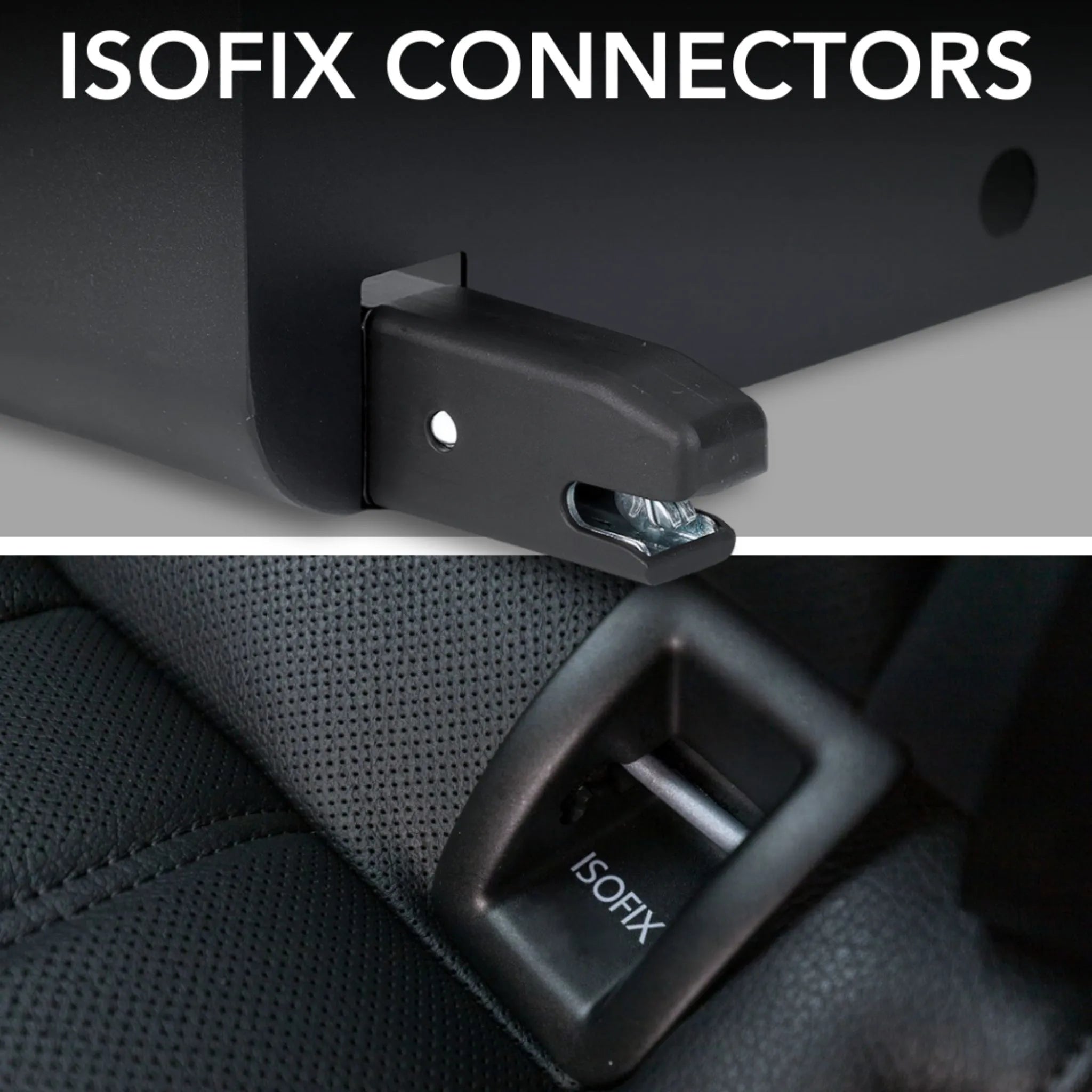
BoostedSafe belongs to the booster-disguise category. The full-size Basic and Elite models place a locked steel safe inside a form that resembles a booster seat when the cover is installed. They are intended for compatible rear-seat setups using the specified connector system. They are storage products, not child restraint systems.
The difference between the two full-size models is primarily access. The Basic uses a manual combination lock with key backup. The Elite adds fingerprint and keypad access with key backup. The right choice depends on which access method you can manage consistently, after fit has been confirmed.

Fingerprint, keypad, and key access for buyers who prefer multiple authorized entry methods.
View BoostedSafe EliteManual combination access with key backup for buyers who prefer a non-biometric primary lock.
View BoostedSafe BasicReview access methods and current product details side by side before choosing.
Open the comparison pageUse the fit guide, then verify dimensions and attachment points in the actual vehicle.
Open the vehicle fit guideHelpful links before you choose a setup
A broader look at vehicle-storage formats, evaluation factors, and use cases.
Read the guideUse a detailed checklist to compare fit, access, construction, attachment, and daily use.
Read the checklistReview research from the Council on Criminal Justice for context on reported gun theft trends.
View the researchRead Everytown Research’s report on firearms stolen from vehicles and related storage considerations.
View the reportFrequently asked questions
Which type of car gun safe is best?
There is no single best category for every vehicle. The right choice fits the exact installation area, attaches as designed, keeps the contents out of sight, provides an access method the authorized user can manage, and complies with current law.
Are under-seat car safes universal?
No. Exterior dimensions are only the starting point. Seat rails, power motors, wiring, floor vents, carpet shape, seat travel, and the available attachment path can all affect compatibility.
Is a center-console safe better than a cable lockbox?
They solve different problems. A fitted console safe can offer an integrated installation and convenient access, while a cable box may be easier to move between compatible vehicles. Compare the specific enclosure, attachment method, fit, and access routine instead of assuming the category decides security performance.
Can I install a headrest safe in any vehicle?
No. Post spacing, post diameter, seat design, wiring, and restraint features vary. Follow the product manufacturer’s compatibility and installation instructions for the exact vehicle and seating position.
Is a BoostedSafe a child booster seat?
The full-size BoostedSafe Basic and Elite are disguised vehicle safes, not child restraint systems. Never seat a child on them or use them in place of an approved child restraint.
Does a LATCH or ISOFIX-style connection mean a safe fits every vehicle?
No. Anchor availability, spacing, seating position, buckle location, seat contour, and product dimensions still matter. Use the manufacturer’s fit guidance and verify the actual vehicle before installation.
Can any vehicle safe prevent every theft?
No. A vehicle safe is one layer of deterrence. Keep the firearm out of sight, lock and attach the container as designed, secure the vehicle, minimize unattended storage time, and follow current storage and transportation laws.
Choose the type that fits the vehicle first
Compare access methods and product details, then confirm the installation area and compatible attachment points in your actual vehicle before ordering.