

You may know your home state’s firearm rules, but a road trip changes the question. The setup that is legal at home may not be legal four states away, and “just passing through” does not automatically make every vehicle storage choice safe or lawful.

Why interstate travel trips people up
Most gun owners build their habits around the place they live. You know how you carry or transport a firearm to work, to the range, or across town. You may not think about it much because the routine is familiar.
A road trip changes the routine. Every state you enter can have its own firearm laws. Some cities and counties may add rules on top of state law. What is allowed loaded and accessible in one place may need to be unloaded, locked, and out of reach somewhere else.
Magazine capacity limits, permit reciprocity, transport rules, and storage definitions can all change across state lines. “Legal at home” does not automatically mean “legal there.”
The federal safe-passage provision
Congress addressed interstate firearm transport in 18 U.S.C. § 926A, often called the federal safe-passage provision.
In general terms, it can protect a person who is transporting a firearm for a lawful purpose from one place where they may lawfully possess and carry it to another place where they may lawfully possess and carry it, if the conditions are met.
Those conditions include the firearm being unloaded and neither the firearm nor ammunition being readily accessible from the passenger compartment. If the vehicle does not have a separate compartment away from the driver’s compartment, the firearm or ammunition must be in a locked container other than the glove compartment or console.
| Federal concept | Plain-English meaning |
|---|---|
| Lawful starting point | You must be traveling from a place where you may lawfully possess and carry the firearm. |
| Lawful destination | You must be traveling to a place where you may lawfully possess and carry the firearm. |
| Unloaded firearm | The firearm must be unloaded during the transport covered by this provision. |
| Not readily accessible | The firearm and ammunition cannot be readily accessible from the passenger compartment. |
| Locked container if needed | If there is no separate compartment, the firearm or ammunition must be in a locked container other than the glove compartment or console. |
Why you still have to check every state you enter
Even with the federal safe-passage provision in mind, the responsible move is to check every state on your route, not just your destination.
State firearm laws change. Permit reciprocity changes. Magazine limits can differ. Some states are straightforward about transport, while others are more technical. Local rules can also matter, especially where you plan to stop overnight.
Use current official sources close to your actual travel date: state legislature websites, state police pages, attorney general pages, or other official state resources. Do not rely on old forum posts, outdated maps, or a rule someone remembered from a previous trip.
| What to check | Why it matters |
|---|---|
| Transport requirements | Some states require unloaded, locked, cased, inaccessible, or other specific storage conditions. |
| Magazine capacity limits | Limits vary by state and can affect what you bring on a trip. |
| Carry permit recognition | Your permit may not be recognized everywhere, or recognition may come with conditions. |
| City or county rules | Local rules may matter in places where you stop, stay overnight, park, or enter public buildings. |
| Restricted locations | Federal property, schools, courthouses, parks, and posted private property can change the analysis. |
The practical setup for the drive
Because the laws can vary so much, many travelers build their road-trip routine around a conservative storage setup: unloaded, locked, anchored, and out of the passenger compartment when transport rules call for it.
A glovebox or console is a weak fit for that standard. Federal safe-passage language specifically points to a locked container other than the glove compartment or console when a vehicle does not have a separate compartment. A bag under the seat is also not a serious transport or theft-prevention setup.
A dedicated vehicle safe gives you a better foundation: a real lock, concealed storage, and attachment to the vehicle when compatible.
Where BoostedSafe Elite fits
BoostedSafe Elite is built for drivers who need hidden, locked, anchor-mounted storage inside the vehicle.
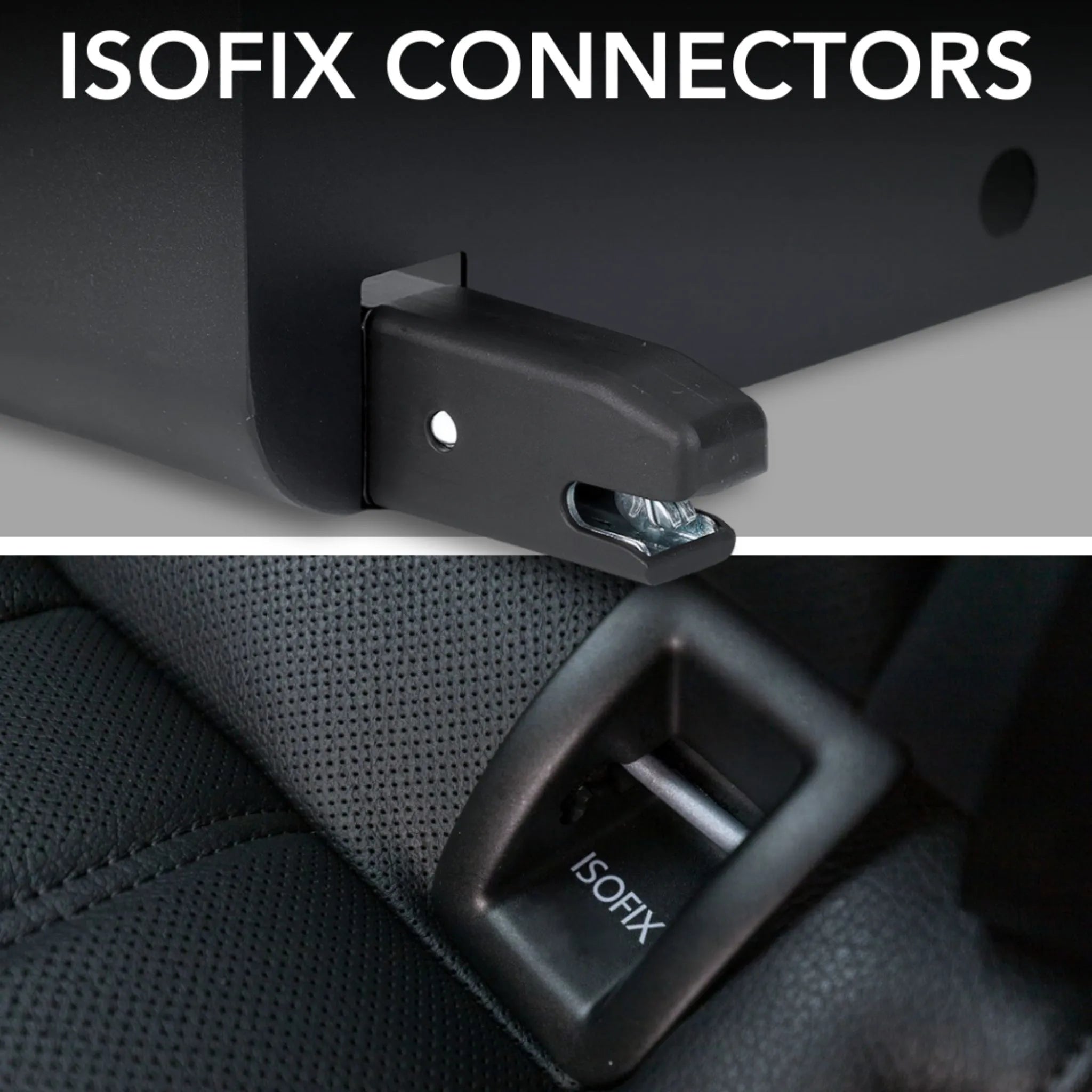
Elite connects to compatible rear-seat LATCH or ISOFIX anchor points, uses keyed disk-detainer, electronic combination, and fingerprint access, and disguises as a booster seat so it does not announce what is inside to someone glancing through a window at a rest stop, gas station, hotel lot, or parking garage.
No vehicle safe is theft-proof, and BoostedSafe does not claim otherwise. The goal is to make theft slower, harder, louder, and less convenient while giving you a dedicated storage setup that supports a more careful road-trip routine.
Fingerprint, keypad, keyed backup, USB-C emergency power, hidden design, and anchor-mounted storage for larger road-trip valuables.
View BoostedSafe EliteCertified booster seat with hidden lockable storage for family vehicles, travel documents, compact valuables, and lawful personal-protection items.
View BoostedSafe Mini EliteCheck compatibility before relying on anchor-mounted storage for a long trip.
Check fitmentCompare Elite, Basic, Mini, and other hidden vehicle storage options.
Shop full lineup
What about family road trips?
Family road trips add another layer because the vehicle may already be packed with bags, food, chargers, tablets, documents, and booster seats. That is exactly when storage gets sloppy.
If you are traveling with a younger child who still needs a booster seat anyway, the BoostedSafe Mini Elite is worth comparing. It is a certified, crash-tested backless booster seat with hidden lockable storage built in. That gives families a way to combine booster-seat function with compact locked storage for passports, cards, phones, keys, and other small valuables.
Always follow final product instructions, child fit requirements, vehicle fit requirements, and applicable law. Mini is not the same product as the larger BoostedSafe Elite. Elite is a larger hidden vehicle safe. Mini is a real booster seat with hidden storage built in.
Pre-trip firearm storage checklist
- Map your full route and list every state you will enter, not just the destination.
- Check each state’s current firearm transport law using official state sources.
- Check magazine capacity limits before packing magazines for the trip.
- Confirm whether your carry permit is recognized in each state, if relevant.
- Check any city or county rules for places where you will stop or stay overnight.
- Know the rules for federal property, courthouses, schools, parks, and posted private property.
- For transport, understand when the firearm must be unloaded, locked, and not readily accessible.
- Do not rely on the glovebox or console as your road-trip storage plan.
- Use dedicated locked storage and anchor it to the vehicle when compatible.
- Recheck your route before future trips because laws can change.
Road trip mindset
This is not about assuming the worst. It is about doing the same practical preparation you already do for the rest of the trip.
You check the route. You check the weather. You check the hotel. You check whether the vehicle has enough space. If you are traveling with a firearm, checking the law and planning storage belongs on the same list.
The right setup is not whatever works at home. It is the setup that fits the route, the vehicle, the firearm, the law, and the places you plan to stop.
Frequently asked questions
Can I travel across state lines with a firearm in my car?
It depends on your route, destination, permit status, firearm, magazine, and storage setup. Federal safe-passage law may apply in specific transport situations, but you still need to check every state on your route.
What is 18 U.S.C. § 926A?
It is the federal interstate transportation provision for firearms. In broad terms, it applies to transport between places where you may lawfully possess and carry the firearm, if the firearm is unloaded and neither the firearm nor ammunition is readily accessible from the passenger compartment.
Can I keep the firearm in the glovebox while crossing states?
Do not rely on the glovebox. Federal safe-passage language says that if the vehicle has no separate compartment, the firearm or ammunition must be in a locked container other than the glove compartment or console.
Do I have to check laws in states I am only driving through?
Yes. The responsible move is to check every state you enter, including pass-through states, because transport rules, permit recognition, magazine limits, and restricted locations can differ.
Does my carry permit work in every state?
No. Permit recognition and reciprocity vary by state and can change. Check current official state sources before your trip.
Is BoostedSafe theft-proof?
No. BoostedSafe is theft-deterrent, not theft-proof. It is designed to make theft slower, harder, louder, and less convenient by combining concealment, anchoring, and real locking hardware.
Which BoostedSafe should I use for road trips?
BoostedSafe Elite is usually the strongest fit for larger road-trip storage, including firearms, laptops, cameras, documents, wallets, and other valuables. BoostedSafe Mini Elite may fit family vehicles that also need certified booster-seat function plus compact hidden storage.
Does BoostedSafe fit every vehicle?
No. Fit varies by year, make, model, trim, seating layout, and rear-seat anchor access. Always check compatibility before ordering.
Plan the route, then plan the storage
Crossing state lines with a firearm means checking the law before the drive and using a storage setup that is locked, hidden, and attached to the vehicle when compatible.