

Ask five gun owners what a “locked container” is and you may get five different answers. A glovebox that latches. A center console with a push-button lid. A soft case with a small lock on the zipper. They may feel locked, but that does not mean they meet the legal definition where you live.

Why the phrase matters
Whether a firearm is considered properly stored or transported in a vehicle can turn on one phrase: locked container.
Some states use that phrase for unattended-vehicle storage. Others use it in transport rules, child-access rules, or specific locations. Federal interstate transport law also uses a related concept when a vehicle does not have a separate compartment away from the driver and passengers.
The practical reason matters too. Firearms stolen from vehicles remain a major source of stolen guns. That is why locked storage is not just paperwork. It is part of keeping the firearm from becoming easy to remove during a break-in.
What statutes generally mean by a locked container
Every state can define the phrase differently, so you need to read the actual law where you live or travel. Still, most locked-container requirements share a few common ideas.
| Common requirement | Plain-English meaning | Common mistake |
|---|---|---|
| Fully enclosed | The firearm is inside a container, not just covered, wrapped, or tucked under something. | Thinking a bag, towel, seat pocket, or under-seat space counts because the firearm is hidden. |
| Actually locked | The container has a key, combination, biometric, or similar locking mechanism that is engaged. | Closing a lid, zipper, latch, or snap without actually locking it. |
| Separate from the car lock | The firearm is inside a locked container, not just inside a locked vehicle. | Assuming “the car was locked” means the firearm was in a locked container. |
| Built to contain | The container is intended to hold and secure the firearm, not merely cover it. | Using a soft pouch or zippered bag with a tiny lock and assuming every state will treat it the same way. |
This is where a factory glovebox or center console often becomes confusing. Some may lock. Some only latch. Some depend on the vehicle’s central locking system. And some laws specifically treat glove compartments and consoles differently from locked containers.
Why the glovebox can fall short
The glovebox is one of the most common places people think of first. It is convenient, close, and sometimes lockable. That does not always make it a locked container for legal purposes.
Federal interstate transport language is a helpful example of the distinction. In vehicles without a separate compartment away from the passenger area, the law points to a locked container other than the glove compartment or console.
That does not mean every state treats gloveboxes the same way in every situation. It does mean you should not assume a glovebox latch, console lid, or locked vehicle automatically satisfies a locked-container requirement.

The gray areas
A few questions come up constantly. The honest answer to most of them is that it depends on your state and the exact wording of the law.
| Question | General answer |
|---|---|
| Is a locked trunk a locked container? | In some situations, a locked trunk may satisfy the storage or transport requirement. In others, the law may require a separate locked case even inside the trunk. |
| Does a cable lock count? | A cable lock may help prevent loading or firing, but it usually does not fully enclose the firearm. It is generally not the same thing as a locked container. |
| Is a locked car enough? | Not usually when a statute specifically says locked container. A locked car is a locked space. A locked container is a separate enclosure inside that space. |
| Does a soft case with a zipper lock count? | It depends on state law and the construction of the case. Some laws may require more than a soft zippered pouch with a small lock. |
| Does a biometric safe count? | Often, yes, if it fully encloses the firearm and the lock is engaged, but you still need to confirm your state’s definition. |
What a stronger setup usually looks like
A setup that is more likely to function as a true locked container usually has three traits: it is a dedicated container built for the job, it uses a real lock, and it is harder to remove from the vehicle.
Legally, anchoring may not be required in every state. Practically, it matters. A locked box sitting loose on the seat or floor may still be carried away after a break-in. A box that is locked and attached to the vehicle is harder to remove quickly.
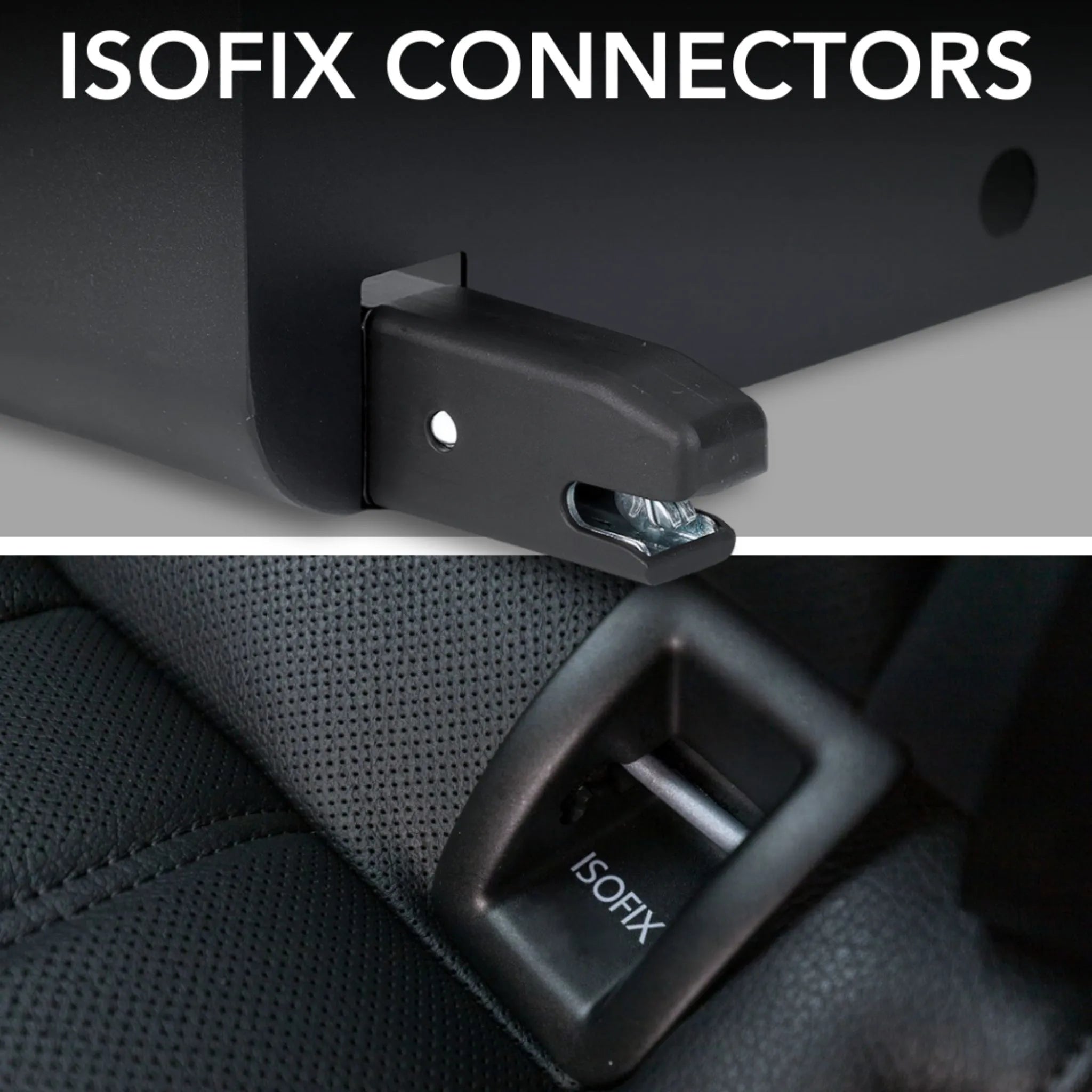
That is the idea behind the BoostedSafe approach: concealment, anchoring, and a real lock. Concealment helps the safe avoid attention. Anchoring connects it to compatible rear-seat LATCH or ISOFIX points. The lock keeps the firearm inside a dedicated enclosure.
Where the BoostedSafe Elite fits
The BoostedSafe Elite is built around the same practical logic: dedicated enclosure, real locks, hidden design, and anchor-based installation in compatible vehicles.
Elite uses a 16-gauge steel body, a keyed disk-detainer lock, electronic combination access, and fingerprint access that stores up to 50 fingerprints. It connects to compatible rear-seat LATCH or ISOFIX anchor points, so it is not just sitting loose in the cabin.
No safe is theft-proof, and that is not the claim. The goal is to make theft slower, harder, louder, and less convenient while giving you a dedicated locked vehicle storage setup instead of relying on a glovebox latch or console lid.
Fingerprint, keypad, keyed access, 16-gauge steel, and hidden anchor-mounted vehicle storage.
View EliteCheck vehicle compatibility before choosing an anchor-mounted safe.
Check fitment
Locked container checklist
- Read your state’s exact definition before relying on any storage setup.
- Confirm whether the firearm must be unloaded.
- Confirm whether the firearm must be inaccessible from the passenger compartment.
- Confirm whether a glovebox or console is excluded from the definition.
- Use a container that fully encloses the firearm.
- Use a real locking mechanism and make sure it is engaged.
- Do not assume a locked car means the firearm is in a locked container.
- Do not assume a soft pouch with a zipper lock qualifies in every state.
- Consider anchoring the container to the vehicle so it is harder to remove.
- Talk to a licensed attorney if the wording is unclear or your situation involves state lines, work parking, schools, or restricted property.
Always confirm your own state’s definition
Everything above describes general patterns. It is not a state-specific legal answer.
Some states define locked container in detail. Some do not. Some distinguish glove compartments and consoles. Some address unattended vehicles. Some focus on transport. Some treat loaded and unloaded firearms differently. The only way to know is to read the current law that applies to your situation.
Before you assume your current storage meets the standard, look up your state legislature’s current text. If anything is unclear, ask an attorney who handles firearm law in your state.
See how BoostedSafe approaches hidden, anchored vehicle storage.
Visit homepageCompare Elite, Basic, Mini, and other vehicle storage options.
Shop all BoostedSafesCompare locking options, concealment, fitment, and anchor-mounted storage.
Read buyer guideLearn how BoostedSafe connects to compatible rear-seat LATCH or ISOFIX anchor points.
Read install guideFrequently asked questions
What is a locked container for a gun in a car?
Generally, it means a container that fully encloses the firearm and uses an actual engaged lock. The exact definition depends on state law, so you need to check your state’s current statute.
Does a glovebox count as a locked container?
Not always. Some laws treat glove compartments and consoles differently from locked containers. Do not assume a glovebox latch or vehicle lock meets the requirement.
Does a center console count?
Not necessarily. A latched or even lockable center console may not satisfy a locked-container requirement depending on state law and the exact wording of the statute.
Is a locked trunk enough?
Sometimes, depending on the law and situation. In other cases, a separate locked case may still be required even if the firearm is in the trunk.
Does a cable lock count as a locked container?
A cable lock can be an important safety device, but it usually does not fully enclose the firearm. It generally should not be treated as the same thing as a locked container unless your state law specifically says so.
Does a locked car count as a locked container?
Usually no. A locked car is a locked space. A locked container is typically a separate enclosure inside the vehicle.
Is BoostedSafe theft-proof?
No. No vehicle safe should be described as theft-proof. BoostedSafe is designed to be theft-deterrent by combining concealment, locking hardware, and compatible vehicle anchor attachment.
Which BoostedSafe model is best for a locked-container setup?
For drivers who want a dedicated locked vehicle safe with multiple access options, the BoostedSafe Elite is usually the strongest fit. It includes fingerprint access, keypad access, keyed backup, 16-gauge steel, and compatible rear-seat anchor attachment.
Choose a real locked vehicle storage setup
Know your state law first. Then use a dedicated storage setup that is enclosed, locked, hidden, and attached to the vehicle when compatible.