

Holiday travel season means a lot of owners are moving between two households, or heading out of state to see family, and asking the same question: can I bring my gun, and how. The honest answer is that flying and driving are two completely different rule sets, and mixing them up is how well-meaning people end up in a bad conversation with an airline agent or, worse, a police officer in a state they don't live in.

Holiday travel season means a lot of owners are moving between two households, or heading out of state to see family, and asking the same question: can I bring my gun, and how. The honest answer is that flying and driving are two completely different rule sets, and mixing them up is how well-meaning people end up in a bad conversation with an airline agent or, worse, a police officer in a state they don't live in.
Holiday travel plus a firearm: the rules are very different by mode

Flying with a firearm: what TSA actually requires
TSA requires firearms in checked baggage to be unloaded and locked in a hard-sided container, with the firearm declared to the airline at check-in. Ammunition is prohibited in carry-on baggage and must be packaged according to TSA and airline rules. Airlines may impose additional requirements, and firearm possession laws still apply at the departure point, destination, and any place where baggage is retrieved.
That last part matters. TSA sets the floor, but airlines can add their own paperwork, case requirements, or declaration forms, and those details differ from carrier to carrier. If you're flying this holiday season, call your airline directly before you pack, and check again close to your travel date since policies do get updated. Don't assume last year's process is still current, and don't assume your case that worked domestically will satisfy an international carrier's requirements if you're crossing a border.
Driving with a firearm: state lines and the federal safe-passage law
Driving puts the responsibility back on you, continuously, for every mile and every state border. State laws on carrying, storage, and transport vary, and what's legal in your home state may not be legal the moment you cross into the next one. There's no way to generalize this responsibly in a blog post, so the real answer is: look up the specific laws for every state you'll be driving through or stopping in, not just your destination, and do it before you leave.
For qualifying interstate transport, 18 U.S.C. 926A protects transportation between places where the traveler may lawfully possess and carry the firearm when it is unloaded and neither the firearm nor ammunition is readily accessible. In a vehicle without a separate compartment, the firearm or ammunition must be in a locked container other than the glove compartment or console. The statute has specific conditions, so it should not be treated as a blanket travel permission.
Driving gives you continuous control over the firearm the whole trip, which some owners prefer. It also means you're responsible for knowing and following more than one state's rules, sometimes several in a single day, with no federal agency standing in to tell you the rules are the same everywhere. That's the tradeoff.
At your destination: don't leave it loose in the car
Whichever way you traveled, once you land or arrive, the firearm still needs somewhere secure to live for the rest of the trip. A rental car, a relative's driveway, or a hotel parking lot are all places where a locked glovebox or a bag under a seat is not real security. Unfamiliar parking lots and busy retail areas can make discreet storage harder during holiday travel, and a firearm left loose in a car, even briefly while you run into a store, is exactly the kind of opportunity a thief is looking for.
If you flew and checked your firearm, you'll need a plan for where it stays once you're at your destination and using a rental or a family member's car for the rest of the trip. If you drove, the same rule applies at every stop along the way, not just the final one. The goal is the same either way: nothing left visible, nothing left unlocked, and nothing left in the car for longer than necessary.

The secure setup for the drive
For any driving leg, use a setup that keeps the firearm out of sight, locked, and attached to the vehicle as designed. BoostedSafe full-size models disguise as booster seats and use compatible rear-seat lower anchors. The attachment adds resistance to grab-and-go removal, while the enclosure and lock add time and effort. No vehicle safe eliminates theft risk.
BoostedSafe Elite offers fingerprint, keypad, and key access. BoostedSafe Mini Elite is a certified, crash-tested backless booster seat with a hidden compartment and is currently listed for October 2026 shipping. Full-size Elite is a disguised safe, not a child seat. Fit varies by vehicle and seating position, so check compatibility before relying on either product for a trip.
Holiday travel is stressful enough without adding legal or security guesswork to the mix. Know which rules apply to your mode of travel, confirm the details with your airline or your state's current statutes before you go, and make sure wherever the firearm lands at the end of each leg, it's locked down and out of sight.
Decision guide
| Travel stage | Flying | Driving |
|---|---|---|
| Before departure | Check TSA rules, airline rules, and firearm laws at both ends. | Check every state on the route, including planned stops and overnight stays. |
| Packing | Unloaded firearm in a locked hard-sided case; ammunition packaged as required. | Follow the applicable transport configuration for each jurisdiction. |
| Access during travel | The checked case is outside normal passenger access. | Access and placement remain the driver's responsibility throughout the trip. |
| At the destination | Plan lawful storage after baggage pickup and in any rental vehicle. | Recheck destination rules and use locked, concealed storage when the vehicle is unattended. |

Practical checklist
- Read the current TSA firearm page.
- Read the airline's current firearm and ammunition policy.
- Verify departure, destination, and connection-point laws.
- For a road trip, verify every state on the route.
- Record firearm make, model, and serial number before travel.
- Measure the rental or family vehicle before assuming a safe will fit.
- Keep the firearm out of sight during loading and unloading.
- Minimize unattended vehicle storage.
- Carry the keys, combinations, and legal documents you may need.
Helpful links before you choose a setup
Review the current full-size and Mini product families.
Compare BoostedSafe ModelsConfirm the vehicle, seating position, dimensions, and anchor access.
Check Vehicle FitCompare fit, access, attachment, construction, and routine.
Vehicle Safe Buyer ChecklistReview the main storage categories and buyer tradeoffs.
Best Vehicle Gun Safes 2026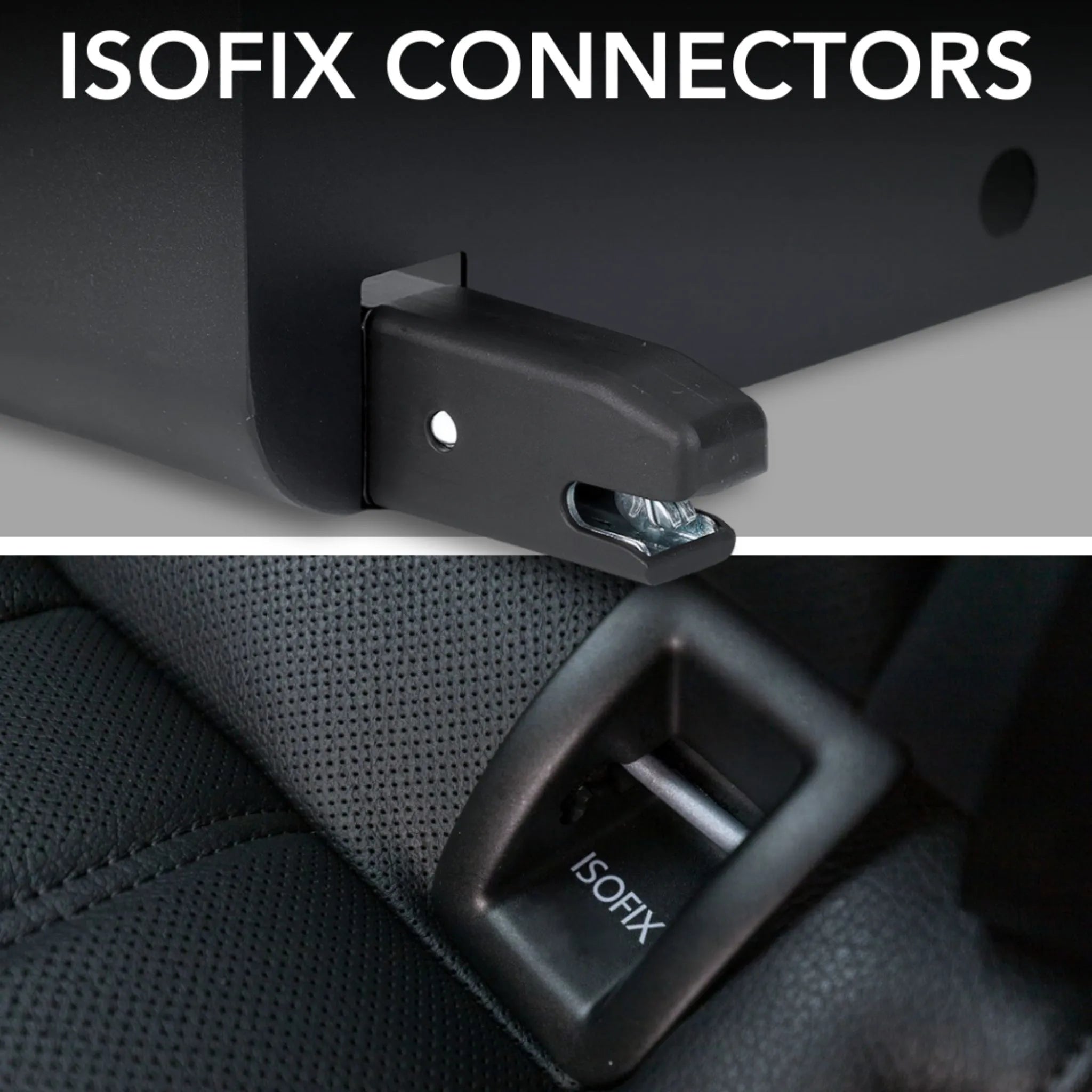
Sources and official references
Official or authoritative reference used to verify this article.
Open sourceOfficial or authoritative reference used to verify this article.
Open sourceOfficial or authoritative reference used to verify this article.
Open sourceOfficial or authoritative reference used to verify this article.
Open sourceFrequently asked questions
Can a firearm go in carry-on baggage?
No. TSA requires firearms to travel unloaded in locked, hard-sided checked baggage and to be declared to the airline.
Can an airline have stricter rules than TSA?
Yes. TSA sets screening requirements, while an airline can add packaging or declaration procedures. Check both.
Does 18 U.S.C. 926A cover every road trip?
No. It contains specific conditions involving lawful possession at both ends, unloaded transport, and lack of ready accessibility.
Can I use the glove compartment for federal safe-passage transport?
The statute says that in a vehicle without a separate compartment, the locked container cannot be the glove compartment or console.
What changes after I arrive?
The destination's possession, carry, and storage rules apply. Plan for hotels, rental vehicles, and family homes before leaving.
Is BoostedSafe Elite a child booster seat?
No. Full-size Elite is a vehicle safe that disguises as a booster seat. Mini Elite is the certified booster-seat product.
Should I leave a firearm in a rental car overnight?
Avoid unattended vehicle storage when possible. If temporary vehicle storage is lawful and necessary, keep it concealed, locked, attached as designed, and stored for the shortest practical time.
Build the storage plan before the trip
Compare access methods and confirm vehicle fit before holiday travel.