

Every October, the same question shows up in our inbox. Someone just watched a demo of a fingerprint car safe opening in under a second, loved it, and then thought about January. Cold fingers. Wet gloves they are not about to peel off in a parking lot. A truck cab that has been sitting at 10 degrees since sunrise. Fair question: does any of that mess with a biometric lock?

Cold weather raises a practical biometric question. Gloves block contact, winter air can dry skin, snow can leave a fingertip wet, and a vehicle battery-powered lock may sit in low temperatures for hours. Those factors do not make fingerprint access useless, but they do make backup planning important.
It can. Not because the technology is bad, but because fingers, batteries, and moisture all behave differently in the cold than they do on a warm afternoon in the showroom. The honest answer is that a fingerprint reader is one very good way to get into a safe fast, and it should never be the only way. Here is what actually happens in cold weather, and what to look for so winter never leaves you locked out of your own safe.
The Fair Question

Contact fingerprint systems need a usable image of the finger. NIST guidance notes that moisture and finger condition can affect successful capture. Gloves prevent direct contact, so they require removal or a different entry method.
- Cold or wet fingers. Chapped, dry skin or a finger still damp from snow or a wiper blade can change how a scanner reads your print.
- Gloves. Most gloves, insulated or not, block the sensor from reading skin at all. You either take a glove off in the cold or you use a different way in.
- Batteries in the cold. Battery chemistry slows down when it is cold, which is true of car batteries, phone batteries, and the batteries inside a small electronic lock. A reader that works fine in July can feel sluggish, or need a boost, on a subzero morning.
None of this means biometric locks do not belong in a vehicle. It means a good one is built assuming winter will happen, and gives you more than one way in.
How Fingerprint Readers Behave in Cold, in General Terms
We are not going to hand you a made-up success percentage here, because nobody in the industry has one worth trusting, and any number you see quoted for "cold weather accuracy" is a guess dressed up as data. What we can tell you in general terms is how the technology behaves.
Fingerprint sensors, whether capacitive or optical, rely on clear contact and a readable print pattern. Moisture, condensation, or a finger that is too dry can all interfere with that read, the same way a scanner can struggle with a greasy or dirty finger in the middle of summer. Cold itself is not the direct enemy. What cold brings with it, dry cracked skin, gloves, snow melt on your hands, is what causes most of the friction.
Low temperatures can reduce available battery performance. The practical response is not to promise a temperature rating the manufacturer has not published. Maintain fresh batteries, know the keypad and key procedures, and keep a compatible USB-C power source available for emergency power.

What Makes a Biometric Car Safe Dependable
If you are going to rely on a fingerprint reader through a Michigan winter or a Colorado mountain pass, look for three things.
- The current BoostedSafe Elite product page states that the reader stores up to 50 fingerprints. Enroll more than one finger from both hands and follow the setup instructions so a single wet, injured, or gloved finger is not the only plan.
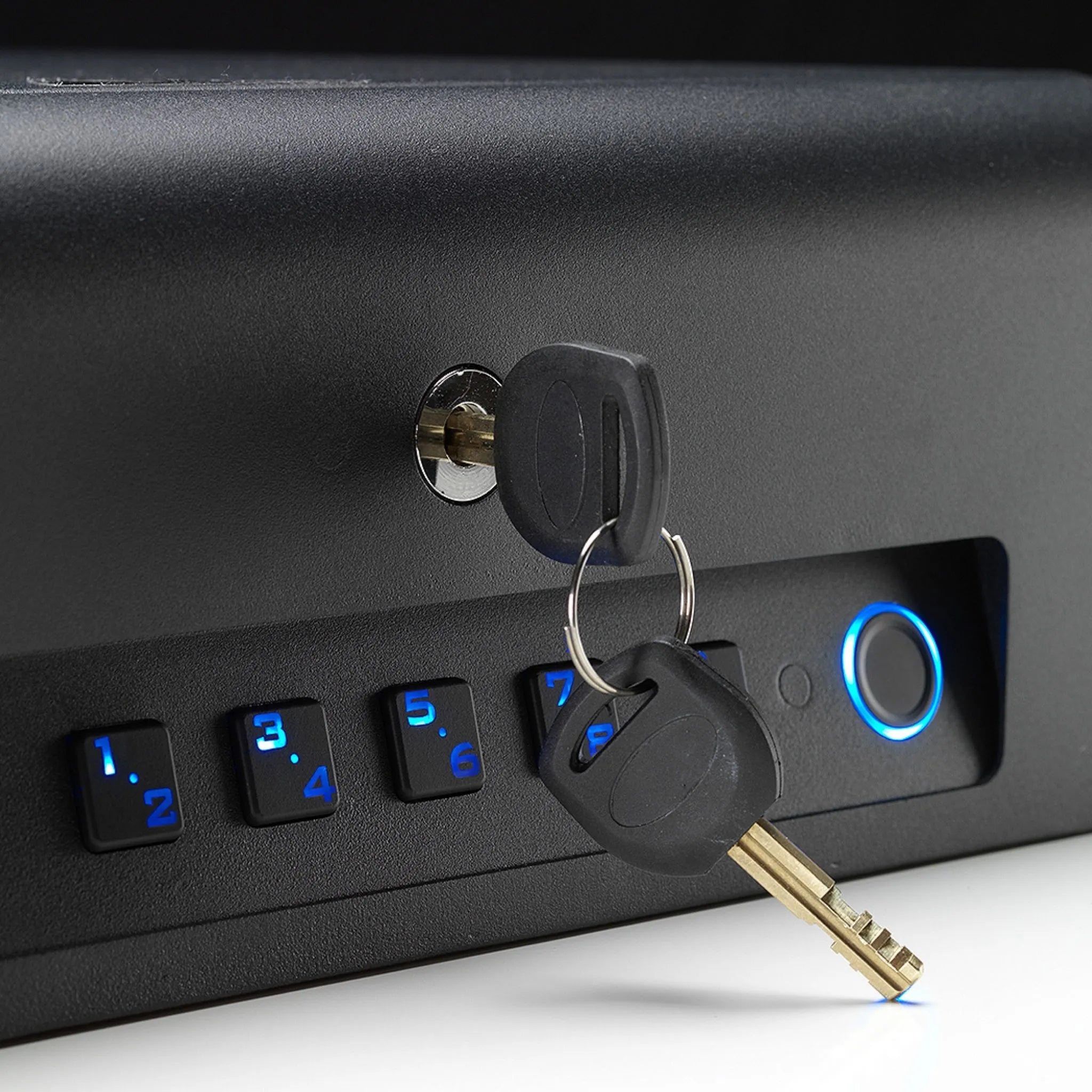
- BoostedSafe Elite pairs fingerprint access with keypad and key access. Those are independent entry methods, which matters when a finger cannot be read or electronic power is low.
- Elite includes a USB-C jump port for temporary emergency power. It is a power backup, not a charging promise, and the key remains the non-electronic backup.
That layering is the whole point. Biometrics are the fast path in. The key, the combo, and the jump port are what keep you from ever being fully dependent on one sensor working perfectly on the coldest morning of the year.
Winter Tips
A few small habits go a long way once temperatures drop.
- Enroll several angles, not just one. When you set up your safe, register more than one finger and try a couple of different placements. A print enrolled only under ideal, warm, dry conditions is more likely to give you trouble later.
- Keep a backup method ready. Know your combination or keep the backup key somewhere accessible, not buried in a glovebox under an ice scraper. If gloves are on and the reader is not cooperating, you want the second option to be quick, not a search.
- Mind the battery. Cold saps battery capacity temporarily, so it is worth checking or replacing batteries before winter sets in rather than after you are stuck. A small USB-C battery pack in the glovebox is cheap insurance.

The Honest Close
Biometrics are convenience layered on top of a real lock, not a replacement for one, and not magic. The value of a fingerprint reader is speed on a normal day, when your hands are dry and the temperature is reasonable. The value of a keyed backup, a combination, and a jump port is that they do not care what the weather is doing.
Fit and installation still vary by vehicle, so if you have not already, check Will It Fit My Car before you buy. You can see the full lineup, including Elite and Mini Elite, at BoostedSafe.
Decision guide
| Winter condition | What can happen | Better response |
|---|---|---|
| Gloves | The sensor cannot read skin through ordinary gloves. | Use keypad or key, or remove one glove in a private and lawful setting. |
| Wet finger | Moisture can reduce capture quality. | Dry the finger and sensor, then retry without repeatedly smearing the pad. |
| Very dry or cracked skin | Ridge detail may capture differently than at enrollment. | Enroll multiple fingers and more than one placement. |
| Low battery output | Electronic access can become less dependable. | Replace batteries proactively and keep key and USB-C backup plans available. |
| Condensation | Moisture can collect when temperatures change. | Keep the reader and safe interior dry and follow the product manual. |
Practical checklist
- Enroll several fingers from both hands.
- Practice keypad and key access before winter.
- Replace aging batteries before prolonged cold weather.
- Keep the backup key controlled and accessible to the authorized adult.
- Carry a compatible USB-C power source for emergency power.
- Dry the finger and sensor before retrying.
- Do not enroll children or unauthorized users.
- Check the safe after large temperature swings for moisture.
- Confirm vehicle fit and installation before relying on the setup.
Helpful links before you choose a setup
Review the current full-size and Mini product families.
Compare BoostedSafe ModelsConfirm the vehicle, seating position, dimensions, and anchor access.
Check Vehicle FitCompare fit, access, attachment, construction, and routine.
Vehicle Safe Buyer ChecklistReview the main storage categories and buyer tradeoffs.
Best Vehicle Gun Safes 2026
Sources and official references
Official or authoritative reference used to verify this article.
Open sourceOfficial or authoritative reference used to verify this article.
Open sourceOfficial or authoritative reference used to verify this article.
Open sourceOfficial or authoritative reference used to verify this article.
Open sourceFrequently asked questions
Do fingerprint gun safes stop working in winter?
Not automatically. Gloves, moisture, skin condition, battery state, and the individual sensor can affect access. Use multiple entry methods.
Will a fingerprint reader work through gloves?
Ordinary gloves block direct skin contact. Plan to use keypad or key when removing a glove is impractical.
Does BoostedSafe Elite have backup access?
Yes. The current product page lists fingerprint, keypad, and key access, plus a USB-C jump port for temporary emergency power.
How many fingerprints can Elite store?
The current live product page states up to 50 fingerprints.
Should I keep the backup key in the vehicle?
Keep it controlled and inaccessible to unauthorized users. Choose a location that does not leave the key with the safe if the entire setup is compromised.
Can cold weather damage the fingerprint reader?
Use the manufacturer's published operating and maintenance instructions. This article does not assign an unpublished temperature rating.
What is the best winter preparation?
Enroll multiple fingers, maintain batteries, practice every access method, keep the sensor dry, and verify the setup before temperatures drop.
Choose layered access for winter
Compare fingerprint, keypad, combination, and key options, then confirm fit for the vehicle.