

Glovebox, center console, under the seat, trunk, or locked safe? Ask ten gun owners where to keep a handgun in the car and you may hear ten different answers. The honest legal answer is less catchy: it depends on your state, your permit status, whether the firearm is loaded, whether it is accessible, and how it is stored.

There is no single national answer
There is no universal rule that says a firearm must always be in the glovebox, console, trunk, or locked safe. Each state can write its own vehicle carry rules, and those rules may change depending on whether the firearm is loaded, concealed, visible, accessible, locked, or being transported between places where you may lawfully possess it.
Permit status can change the answer too. In some states, a valid carry permit may allow more access inside the passenger compartment. In others, a locked-container rule may still apply in certain situations.
That is why a single blog post cannot give a final legal answer for every driver. The right approach is to understand the variables, then check the statute for your own state.
The three variables that actually decide it
Most vehicle firearm storage questions come down to three practical legal variables: accessibility, loaded status, and whether the firearm is actually locked.
| Variable | Why it matters | What to check |
|---|---|---|
| Concealed or accessible | Some laws care whether a firearm is visible. Others care whether it is readily accessible to the driver or passengers. | Look for terms like concealed, readily accessible, passenger compartment, immediate control, or within reach. |
| Loaded or unloaded | Some states treat a loaded handgun in the passenger area very differently from an unloaded firearm being transported. | Check how your state defines loaded, unloaded, ammunition, magazine, chamber, and transport. |
| Locked or loose | A closed glovebox, latched console, or locked vehicle may not count as a locked container under the law. | Look for the exact definition of locked container, secure container, glove compartment, utility compartment, or console. |
Once you understand those variables, the glovebox-vs-console-vs-trunk question becomes much easier to evaluate.
The glovebox and console: why they are a gray area
The glovebox and center console are two of the most common places people keep a handgun in a car. They are also two places that can create legal and practical problems.
First, they are usually within arm’s reach of the driver. If your state cares whether the firearm is readily accessible, a closed glovebox may not be enough.
Second, “closed” is not always the same as “locked.” A glovebox latch or console lid may not meet your state’s definition of a locked container. Even a locked vehicle does not automatically mean the firearm itself is in a locked container.
Third, the glovebox and console are predictable. They are some of the first places someone checks during a vehicle break-in.

The trunk: safer legally in some states, but not always practical
In some states and situations, moving a firearm to the trunk can change the legal analysis because the trunk is generally separate from the passenger compartment. That can matter where the law focuses on accessibility.
Federal interstate transport language also distinguishes between a firearm being readily accessible from the passenger compartment and storage in a separate compartment or locked container. For vehicles without a separate compartment, federal transport language points to a locked container other than the glove compartment or console.
The trunk has two real drawbacks. First, it is slow if your purpose is lawful personal protection during travel. Second, not every vehicle has a separate trunk. SUVs, hatchbacks, crossovers, trucks, and vans often do not have a sealed-off trunk separate from the passenger area.
Why a locked, anchored car safe avoids many of the practical problems
A real vehicle safe helps solve the issues that make gloveboxes and consoles weak storage choices. It can keep the firearm out of sight, behind an actual lock, and attached to the vehicle when installed correctly in a compatible vehicle.
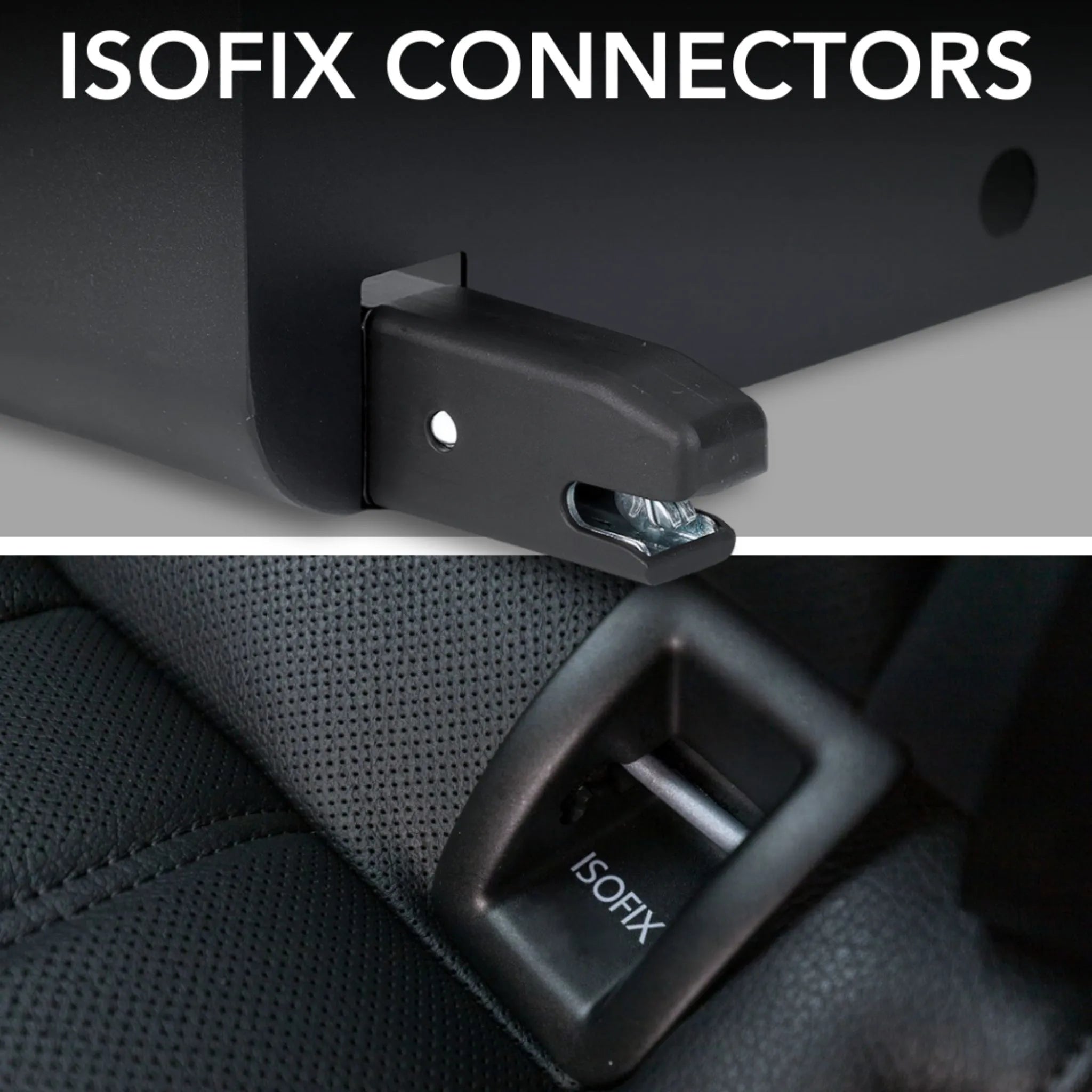
BoostedSafe was built around a three-part model: concealment, anchoring, and a real lock. The safe disguises as ordinary rear-seat gear, connects to compatible factory LATCH or ISOFIX anchor points, and uses locking hardware instead of relying on a glovebox latch or console lid.
No vehicle safe is theft-proof, and BoostedSafe does not claim otherwise. The goal is theft deterrence: make the firearm harder to see, harder to access, harder to remove, and less convenient to steal.
Where the BoostedSafe Elite fits
The BoostedSafe Elite is the strongest fit for drivers who want fast, locked access in the cabin without relying on the glovebox, center console, or trunk.
Elite uses a keyed disk-detainer lock, electronic combination access, and a fingerprint reader that stores up to 50 fingerprints. It is built from 16-gauge steel and connects to compatible rear-seat LATCH or ISOFIX anchor points in the vehicle.
That does not replace knowing your state law. It simply gives you a dedicated locked container that is hidden, anchored, and built for vehicle use instead of relying on a compartment that may not qualify as a locked container in your state.
| Option | Legal question | Practical question |
|---|---|---|
| Glovebox | Does your state treat this as locked, accessible, concealed, or not enough? | Is it one of the first places someone will check? |
| Center console | Does a console count as a locked container in your state? | Is it predictable and easy to search? |
| Trunk | Does your state treat the trunk as separate from the passenger compartment? | Is it too slow or unavailable in your vehicle type? |
| Anchored vehicle safe | Does your state require a locked container, out-of-sight storage, unloaded status, or other conditions? | Does the safe fit your vehicle and stay attached to compatible anchor points? |

Check your state before you decide
The only reliable answer for your situation is the current law where you live or travel. Do not rely on a forum post, a coworker’s shortcut, or a rule from another state.
Go to your state legislature’s website and look for the actual statute language on vehicle carry, concealed carry, loaded firearms, locked containers, transportation, accessibility, and permit exceptions. ATF also maintains a state laws and published ordinances resource that can help you find current state firearm-law references.
If you are crossing state lines, transporting an unloaded firearm, parking at work, entering federal property, or carrying under a permit, the details matter even more.
Vehicle firearm storage checklist
- Check your state’s current law before choosing glovebox, console, trunk, or safe storage.
- Confirm whether your permit status changes the vehicle carry rules.
- Confirm whether loaded and unloaded firearms are treated differently.
- Check whether your state uses terms like readily accessible, passenger compartment, locked container, glove compartment, or console.
- Do not assume a latched glovebox or center console counts as a locked container.
- Do not assume a locked vehicle means the firearm itself is legally locked.
- Use a dedicated locked container when your state requires one.
- Keep the firearm out of sight whenever possible.
- Confirm vehicle fitment before buying any anchor-mounted safe.
- Talk to a licensed attorney if your situation involves state lines, workplace parking, federal property, schools, or unclear statute language.
Helpful links before you choose a storage setup
Use these pages to compare BoostedSafe options, check fitment, and understand the lineup before deciding where your firearm belongs in the vehicle.
Fingerprint, keypad, keyed access, 16-gauge steel, and anchor-mounted vehicle storage.
View BoostedSafe EliteCheck compatibility before ordering any anchor-mounted BoostedSafe.
Check fitmentCompare Elite, Basic, Mini, and other vehicle storage options.
Shop all BoostedSafesLearn how BoostedSafe approaches hidden, anchored vehicle storage.
Visit homepageFrequently asked questions
Is it legal to keep a gun in the glovebox?
It depends on your state, permit status, whether the firearm is loaded, and whether your state treats a glovebox as accessible, concealed, or not a locked container. Check your current state law before relying on glovebox storage.
Is a center console a locked container?
Not necessarily. A latched console is not always the same as a locked container under state law. Some laws specifically distinguish a locked container from a glove compartment or console.
Is the trunk the safest legal option?
In some transport situations, a trunk may help because it is separate from the passenger compartment. But it is not available in every vehicle, may be slow to access, and may not solve every state-law requirement.
Does a carry permit change where I can keep a gun in the car?
It may. Permit status can change vehicle carry rules in some states, but not always. Check the statute language for your state and permit type.
Does a locked car mean the gun is legally locked?
Not always. Some laws require the firearm itself to be in a locked container. A locked vehicle, closed glovebox, or latched console may not be enough.
Is BoostedSafe theft-proof?
No. No vehicle safe should be called theft-proof. BoostedSafe is designed to be theft-deterrent by combining concealment, locking hardware, and compatible vehicle anchor attachment.
Which BoostedSafe model is best for this use?
For drivers who want a dedicated locked vehicle safe with fast access, the BoostedSafe Elite is usually the strongest fit. It includes fingerprint access, keypad access, keyed backup, 16-gauge steel, and compatible rear-seat anchor attachment.
Move past the glovebox debate
Know your state law first. Then choose a storage setup that keeps your firearm locked, hidden, and attached to the vehicle when compatible.