

FMVSS 225 is the federal vehicle safety standard behind the lower anchors and tether anchors used for child restraint systems in many passenger vehicles. It matters because those factory anchor points are not random hooks in the seat. They are vehicle-level anchorage systems governed by a federal standard.
What FMVSS 225 is
FMVSS 225 is Federal Motor Vehicle Safety Standard No. 225, titled “Child restraint anchorage systems.” It is published by the National Highway Traffic Safety Administration and codified at 49 CFR 571.225.
The standard establishes requirements for the location, strength, marking, and use of child restraint anchorage systems. In the standard, a child restraint anchorage system consists of two lower anchorages and a tether anchorage at a designated seating position.
For BoostedSafe readers, the key point is simple: the rear-seat anchor points used for child restraint systems are part of the vehicle's federally regulated safety equipment. BoostedSafe is designed to use those compatible anchor points for vehicle storage.
| Term | Plain-English meaning | Why it matters |
|---|---|---|
| FMVSS 225 | The U.S. federal safety standard for child restraint anchorage systems. | It governs the vehicle anchorage system, not aftermarket safes. |
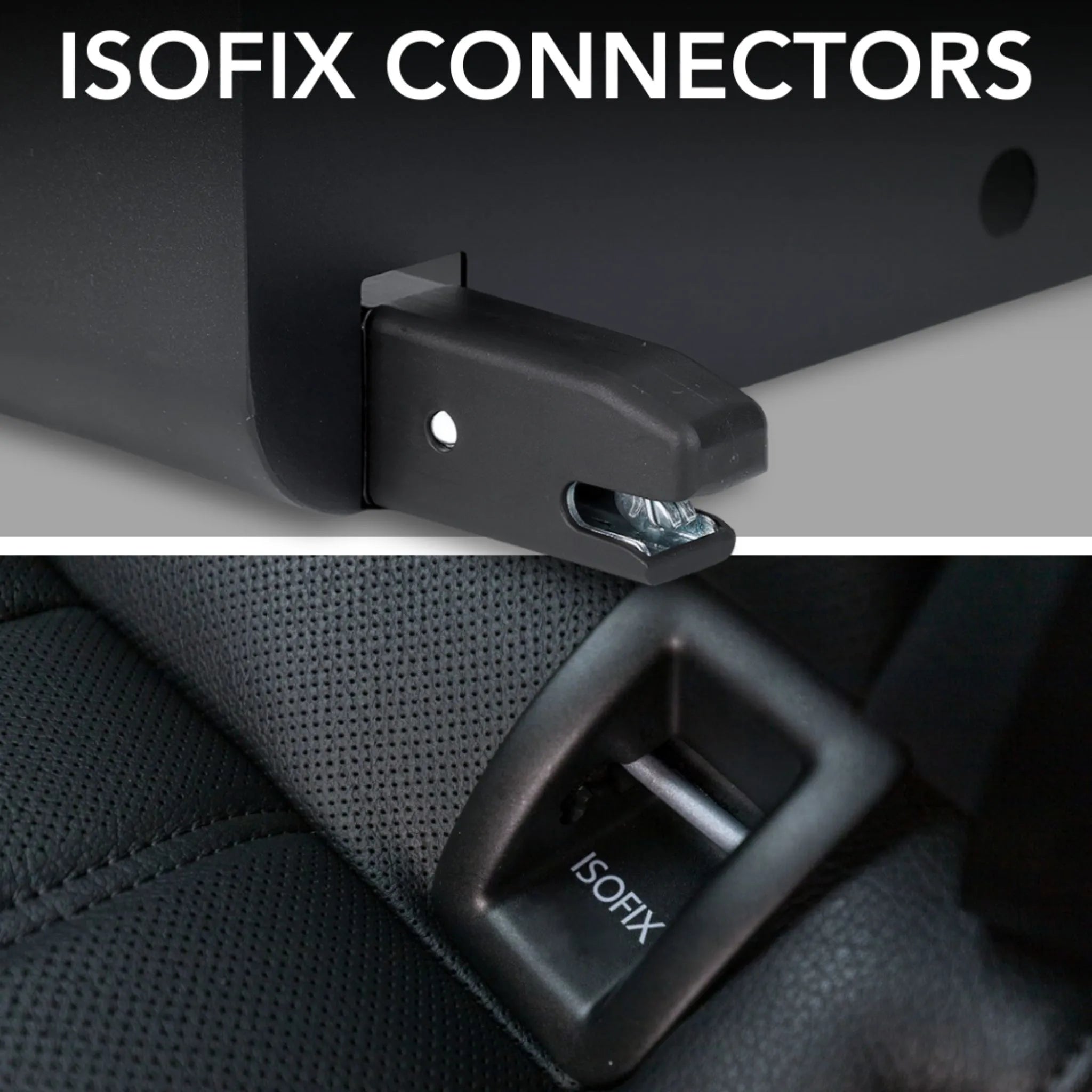
| Lower anchors | The two lower anchor bars at a seating position. | These are the factory anchor points commonly used by LATCH-style child seats and compatible BoostedSafe installs. |
| Tether anchor | The upper anchorage used with a child restraint tether strap. | It has its own federal test requirements and location rules. |
| LATCH | The common U.S. name for Lower Anchors and Tethers for Children. | This is the term most U.S. vehicle owners recognize from child seat installation. |
| ISOFIX | The international child restraint anchorage term often used for similar lower-anchor hardware. | Many consumers use LATCH and ISOFIX interchangeably, but FMVSS 225 is the U.S. regulatory standard. |
The strength numbers people should actually know
The current FMVSS 225 text includes specific strength test requirements for the vehicle anchorages. For lower anchorages, the standard lists a forward-force test of 11,000 newtons. For tether anchorages, the standard lists a 15,000 newton test force.
Converted into pounds-force, 11,000 newtons is about 2,470 pounds-force. Fifteen thousand newtons is about 3,370 pounds-force. Those conversions help put the numbers into a more familiar scale, but the federal standard itself is written in newtons.
These are vehicle anchorage test requirements. They should not be turned into a claim that any aftermarket safe is “FMVSS 225 certified.” The cleaner claim is that BoostedSafe is designed to attach to compatible vehicle anchor points governed by FMVSS 225.
Why anchor-mounted storage is different from a loose box
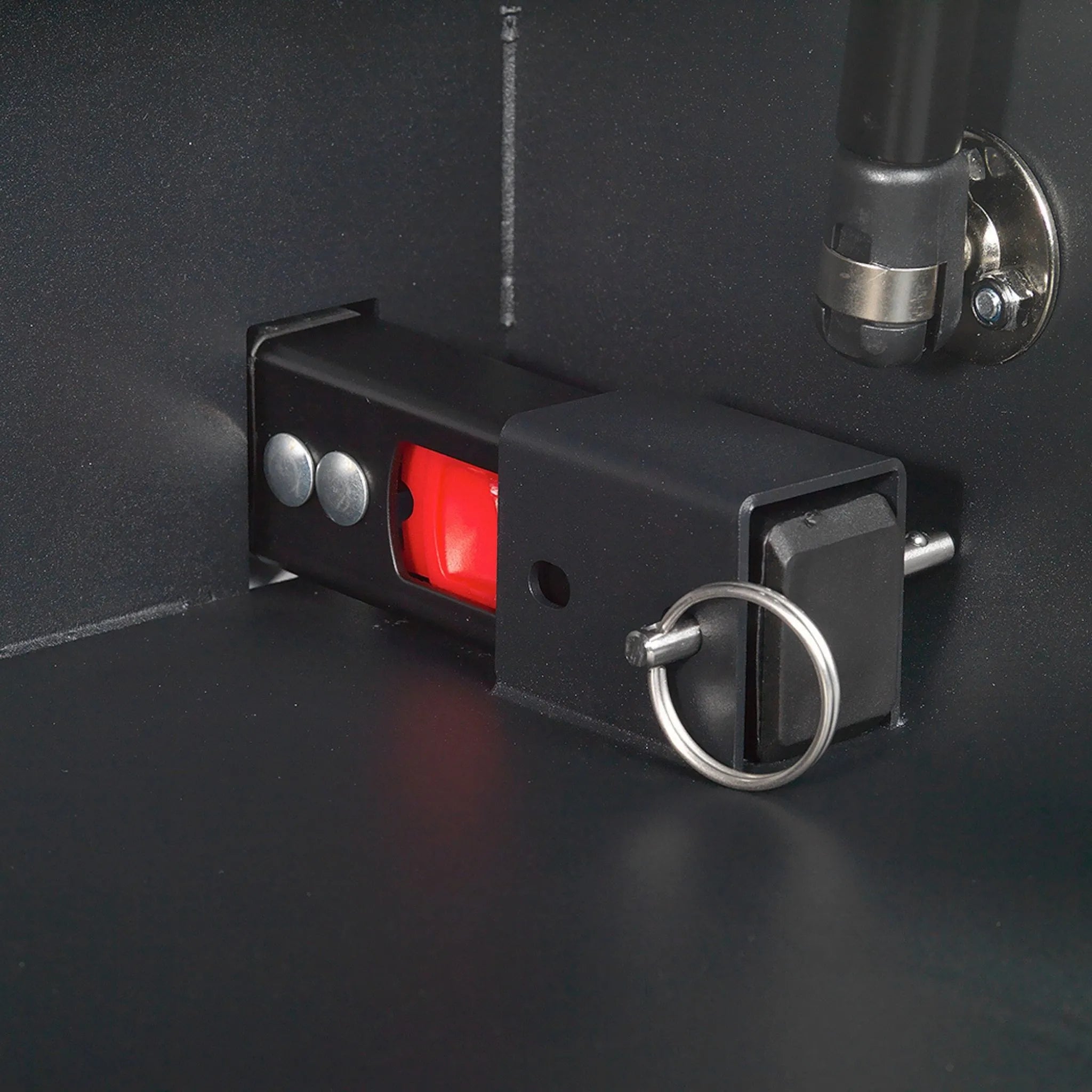
A vehicle safe that connects to compatible LATCH or ISOFIX anchor points is using a factory anchorage system built into the vehicle. That is different from placing a loose box on a seat, in a footwell, or under a jacket.
The practical difference is the storage routine. A loose container can move with the contents if someone gets into the vehicle. A properly installed anchor-mounted safe is connected to the vehicle at the anchor points, which adds another step compared with leaving a firearm or valuables loose.
That does not make any vehicle safe theft-proof. No responsible brand should make that claim. It does mean the attachment method matters, especially when the goal is hidden, locked, vehicle-attached storage.
| Storage method | What it relies on | Practical issue |
|---|---|---|
| Glove box or console | The vehicle's built-in compartment. | Predictable place to search once someone is inside the vehicle. |
| Loose lockbox | The box lock only. | Better than leaving items loose, but still may be removable as one object. |
| Cable-tethered box | A lockbox plus a cable attachment point. | Depends on the cable, the lock, and what the cable is wrapped around. |
| Anchor-mounted safe | A locking safe connected to compatible factory anchor points. | Uses a vehicle anchorage system instead of relying only on a loose container. |
Why BoostedSafe uses the rear-seat anchors
BoostedSafe is built around a simple idea: the safest storage routine is not only about the box. It is about where the box goes, whether it is visible, how it locks, and whether it is attached to the vehicle.
The rear-seat LATCH or ISOFIX anchor location gives BoostedSafe a practical installation point in compatible vehicles. The safe can sit in the rear-seat area, disguise under the booster-style cover, lock shut, and connect to the vehicle's compatible anchor points.
That combination is why BoostedSafe is different from a standard portable lockbox. It is not trying to look like a safe sitting in the cabin. It is designed to blend in while staying connected to the vehicle.

The 2025 FMVSS 225 update
NHTSA published a final rule in January 2025 updating FMVSS 225 and FMVSS 213b. The update focused on improving ease of use for child restraint anchorage systems, including lower anchorages, tether anchors, labeling, and related usability details.
A later Federal Register correction set the effective date at March 20, 2025. The rule also includes a phase-in schedule for updated FMVSS 225 requirements beginning September 1, 2028.
For BoostedSafe owners, the important distinction is that the 2025 update is about the vehicle's child restraint anchorage system. It does not create a new certification category for aftermarket vehicle safes.
What FMVSS 225 does not say
FMVSS 225 does not regulate every product that attaches to a vehicle anchor. It regulates the vehicle's child restraint anchorage system.
That means an aftermarket product should be careful with its wording. “FMVSS 225 certified safe” is not the right framing. The accurate framing is that the safe is designed to use compatible vehicle anchor points governed by FMVSS 225.
This distinction matters because it keeps the claim honest. BoostedSafe is using federally regulated vehicle anchor locations. It is not claiming that FMVSS 225 is a federal certification program for aftermarket vehicle safes.
| Claim | Is it the right framing? | Better wording |
|---|---|---|
| “FMVSS 225 certified safe” | No. | FMVSS 225 governs the vehicle anchorage system, not the safe. |
| “Uses compatible LATCH or ISOFIX anchor points” | Yes. | Clear and customer-friendly. |
| “Designed to attach to anchor points governed by FMVSS 225” | Yes. | Technical but accurate. |
| “Theft-proof because it uses anchors” | No. | Use theft-deterrent language instead. |
What to check in your own vehicle
- Check whether your rear-seat position has accessible lower anchors.
- Review your vehicle owner's manual for LATCH or child restraint anchor locations.
- Make sure the anchor points are not blocked by trim, seat covers, or unusual seat geometry.
- Confirm the safe can sit correctly in the seat position before relying on it.
- Use the booster-style cover to reduce the visual cue from outside the vehicle.
- Do not describe any vehicle safe as theft-proof.
- Do not claim FMVSS 225 certifies aftermarket safes.
- Check BoostedSafe fitment before ordering if you are unsure.
Which vehicles are covered by FMVSS 225?
The current FMVSS 225 application section covers passenger cars, trucks and multipurpose passenger vehicles with a gross vehicle weight rating of 8,500 pounds or less, and buses, including school buses, with a gross vehicle weight rating of 10,000 pounds or less.
The standard also lists exclusions, including walk-in van-type vehicles, vehicles made exclusively for the U.S. Postal Service, shuttle buses, and funeral coaches.
That is why fitment should always be checked by the actual vehicle, not only by model year. Seat layout, trim, seating position, and anchor access can vary.
Official sources to read
Use the official sources below to review the standard directly. FMVSS 225 is technical, but the core point is not complicated: the lower anchors and tether anchors are federally regulated vehicle anchorage systems.
Current eCFR text for FMVSS 225, Child restraint anchorage systems.
Read FMVSS 225Laboratory test procedure for FMVSS 225 child seat anchorages.
Read NHTSA test procedureFederal Register final rule updating FMVSS 225 and FMVSS 213b for child restraint systems and anchorage systems.
Read final ruleFederal Register correction setting the effective date at March 20, 2025.
Read correctionFingerprint, keypad, and key access with hidden, anchor-based vehicle storage for compatible vehicles.
See BoostedSafe EliteManual combination lock option for hidden, anchor-based vehicle storage.
See BoostedSafe BasicFrequently asked questions
Are LATCH and ISOFIX the same thing?
LATCH is the common U.S. term for Lower Anchors and Tethers for Children. ISOFIX is the international term often used for similar child restraint anchorage hardware. Many consumers use the terms interchangeably, but FMVSS 225 is the U.S. federal standard for child restraint anchorage systems.
What are the strength numbers in FMVSS 225?
The current FMVSS 225 text lists an 11,000 newton forward-force test for lower anchorages and a 15,000 newton test force for tether anchorages. In approximate pounds-force, those are about 2,470 pounds-force and 3,370 pounds-force.
Does FMVSS 225 certify BoostedSafe?
No. FMVSS 225 governs the vehicle's child restraint anchorage system. BoostedSafe is designed to attach to compatible anchor points governed by FMVSS 225, but the standard does not certify aftermarket vehicle safes.
Did FMVSS 225 change in 2025?
Yes. NHTSA updated FMVSS 225 and FMVSS 213b in 2025 to improve ease of use for child restraint anchorage systems and child restraint systems. A correction set the effective date at March 20, 2025, with a later phase-in schedule for updated FMVSS 225 requirements.
Does every vehicle have the same anchor setup?
No. FMVSS 225 has application rules and exclusions, and vehicle seating layouts can vary. Always check the specific vehicle, seating position, and owner manual before assuming fitment.
Why does BoostedSafe use the rear-seat anchor points?
The rear-seat anchors provide a factory vehicle attachment point in compatible vehicles. BoostedSafe uses that location to create hidden, locked, vehicle-attached storage instead of a loose box sitting in the cabin.
Does using anchor points make a safe theft-proof?
No. No vehicle safe should be described as theft-proof. Anchor-mounted storage is a better routine than loose or visible storage, but it does not eliminate all theft risk.
The anchor point matters
BoostedSafe is built around the rear-seat anchor system because storage should be hidden, locked, and attached to the vehicle when compatible. That is a better routine than leaving valuables loose, visible, or in the same compartments everyone checks.
Sources reviewed: 49 CFR 571.225, NHTSA FMVSS 225 laboratory test procedure, Federal Register 2025 FMVSS 225 final rule, Federal Register 2025 correction, the live BoostedSafe Elite product page, and the live BoostedSafe Basic product page.