

Do you legally have to keep ammunition in a separate container from your gun when it is in the car? There is no single nationwide rule that says yes for ordinary driving. The real answer depends on whether you are driving in-state, crossing state lines, carrying under a permit, or following a specific state transport rule.

Where the belief comes from
Most people asking this question are not inventing a random myth. They have heard part of a real rule and applied it too broadly.
One person may be talking about everyday carry rules in a specific state. Another may be talking about unloaded transport rules. Someone else may be talking about crossing state lines under federal safe-passage language. Those are not the same situation.
That is the root of the confusion. A rule can be real in one context and still be wrong for the trip you are actually taking.
| Source of confusion | What people hear | What you actually need to check |
|---|---|---|
| Everyday vehicle carry | “Ammo has to be separate.” | Your state’s rules for loaded firearms, permit status, and vehicle carry. |
| General transport rules | “The gun has to be unloaded and locked.” | Whether your state requires unloaded, locked, cased, separated, or inaccessible transport. |
| Interstate travel | “Federal law says gun and ammo cannot be accessible.” | 18 U.S.C. § 926A and the state laws where your trip begins, passes through, and ends. |
The federal picture, in general terms
There is no general federal law that requires ammunition to be stored separately from a firearm for ordinary in-state driving. Day-to-day vehicle firearm rules are primarily handled by state law.
Federal law becomes especially relevant in the narrower interstate transport situation covered by 18 U.S.C. § 926A. In general terms, that provision applies when a person who is not prohibited from possessing firearms is transporting a firearm for a lawful purpose from one place where they may lawfully possess and carry it to another place where they may lawfully possess and carry it.
The conditions include the firearm being unloaded and neither the firearm nor the ammunition being readily accessible from the passenger compartment. If the vehicle does not have a separate compartment away from the passenger area, the firearm or ammunition must be in a locked container other than the glove compartment or console.

Why states differ
Vehicle firearm storage is mostly a state-law question. Some states are permissive about carrying a loaded firearm in a vehicle. Others have stricter rules depending on whether you have a permit, whether the firearm is loaded, whether it is visible, whether it is accessible, and whether it is in a locked container.
Some state rules may require the firearm to be unloaded. Some may require a case or locked container. Some may address ammunition placement directly. Others may not. Permit reciprocity can also add another layer when you travel across state lines.
That is why the most reliable answer is not a forum comment or a one-size-fits-all rule. It is the current statute language in the state where you are driving.
Why “unloaded and locked” is a common conservative default
Because state rules differ so much, many experienced owners default to a conservative habit when the firearm is not actively being carried: unloaded, locked, and out of sight.
That does not mean it is the legal rule everywhere. It means the habit tends to avoid the weakest and riskiest setup: a firearm loose in a glovebox, console, bag, or under the seat.
If your state is more permissive, a locked-storage habit may still be a responsible choice. If your state is stricter, the habit may move you closer to the required standard, but you still need to confirm the exact law.
| Storage habit | Why people use it | What it does not replace |
|---|---|---|
| Unloaded | May align with stricter transport rules and reduce handling risk. | Your state’s definition of unloaded. |
| Locked | Keeps the firearm inside a dedicated container instead of loose in the cabin. | Your state’s definition of locked container. |
| Out of sight | Reduces visual cues that can invite a break-in. | Any legal requirement for accessibility, placement, or separation. |
| Ammo separated if needed | May be useful when state law, range rules, travel rules, or personal preference call for it. | Checking whether separation is actually required in your situation. |
The practical takeaway
Whatever your state requires, the practical problem is the same: once a firearm is out of your hands and sitting in a vehicle, it should not be visible, loose, or easy to remove.
A glovebox or console is predictable. A bag under a seat is easy to carry away. A loose lockbox can still leave through a broken window and be opened later somewhere else.
A locked, anchored vehicle safe solves a different problem. It keeps the firearm out of sight, places it behind a real lock, and attaches the storage to the vehicle when compatible.
Where BoostedSafe fits
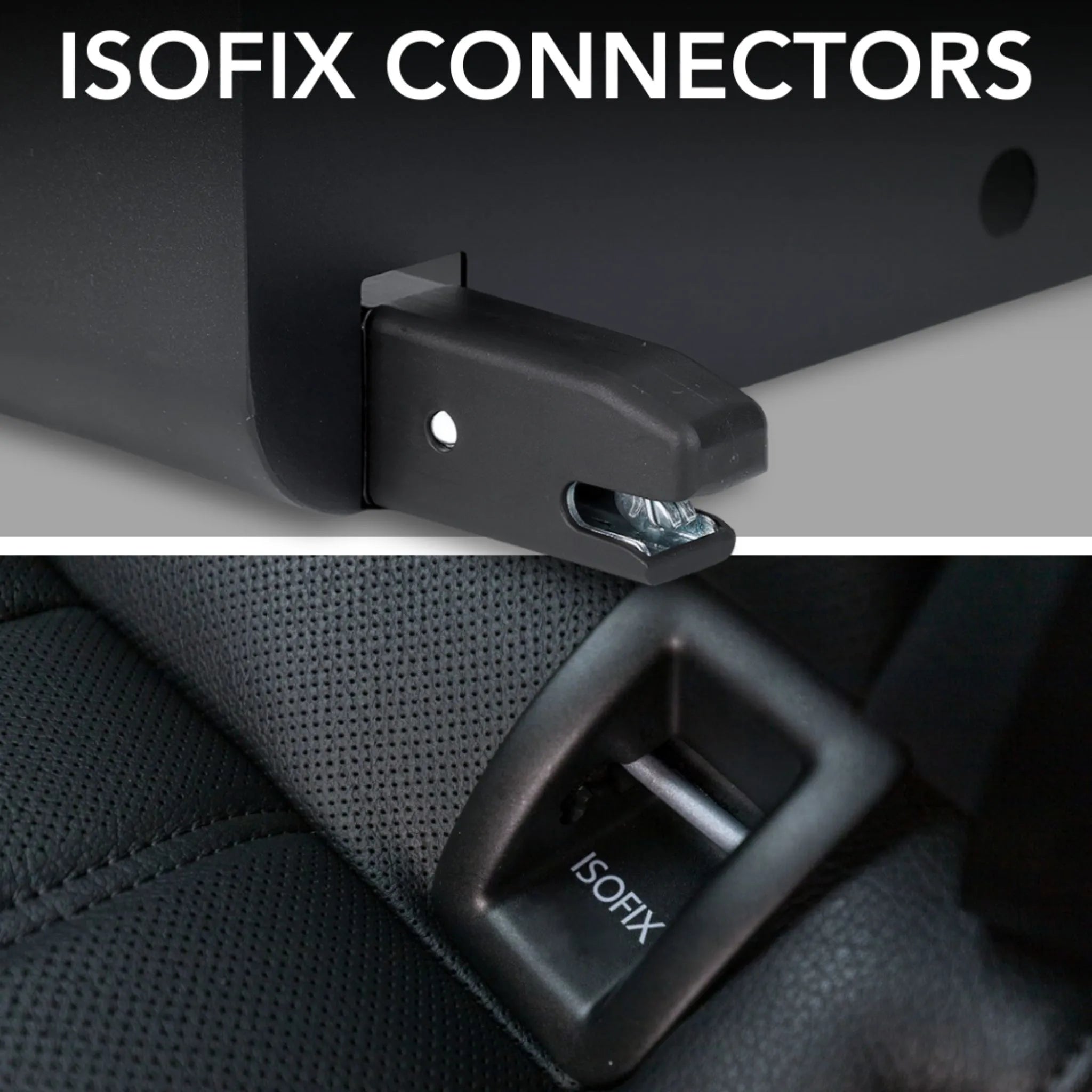
The BoostedSafe Elite disguises as a booster seat, so the vehicle is less likely to be picked out as a target in the first place. It locks to compatible factory LATCH or ISOFIX anchors, so it cannot simply be lifted out through a broken window like a loose lockbox.
Inside, you can organize the firearm and, if your situation calls for it, keep a magazine or ammunition separated within the same locked case. The point is not to claim one setup satisfies every state. The point is to give you a dedicated locked, hidden, anchored storage system that can support a more careful routine.
No safe is theft-proof, and BoostedSafe does not claim otherwise. It is designed to make a smash-and-grab slower, harder, louder, and less convenient than loose vehicle storage.
Fingerprint, keypad, keyed backup, USB-C emergency power, hidden design, and anchor-mounted vehicle storage.
View BoostedSafe EliteManual combination lock, quick-access key, hidden design, and anchor-mounted vehicle storage.
View BoostedSafe BasicCheck compatibility before ordering any anchor-mounted BoostedSafe.
Check fitmentCompare Elite, Basic, Mini, and other hidden vehicle storage options.
Shop all BoostedSafes
Before you decide how to store ammo in the car
- Check whether your trip is ordinary in-state driving or interstate transport.
- Check whether your permit status changes the vehicle carry rules.
- Check whether your state requires the firearm to be unloaded.
- Check whether your state requires a locked container.
- Check whether your state says anything specific about ammunition placement.
- Check how your state defines loaded, unloaded, readily accessible, and locked container.
- Do not assume a glovebox or console counts as a locked container.
- Use a locked, hidden, anchored storage setup when a firearm must stay in the vehicle.
- Talk to a licensed attorney if you are crossing state lines or the statute language is unclear.
Bottom line
There is no blanket federal rule requiring you to store ammunition separately from your gun for ordinary driving. Federal law does set specific conditions for interstate transport under 18 U.S.C. § 926A, and many states have their own separate requirements for everyday carry, transport, loaded status, locked containers, and ammunition placement.
The only reliable way to know what applies to you is to check your state’s current statute language. When in doubt, ask a licensed attorney.
In the meantime, a conservative routine can help: keep the firearm unloaded when appropriate, locked in a dedicated container, out of sight, and secured to the vehicle when compatible.
Frequently asked questions
Do I have to store ammo separately from my gun in the car?
There is no single nationwide rule that says yes for ordinary driving. The answer depends on your state law, permit status, travel route, vehicle type, and whether you are transporting, carrying, or crossing state lines.
Does federal law require ammo to be separate for ordinary driving?
No general federal rule requires ammunition to be stored separately from a firearm for ordinary in-state driving. Federal law does have specific conditions for interstate transport under 18 U.S.C. § 926A.
What does 18 U.S.C. § 926A say in general?
In broad terms, it covers interstate transport between places where you may lawfully possess and carry the firearm. It requires the firearm to be unloaded, and neither the firearm nor ammunition may be readily accessible from the passenger compartment. If there is no separate compartment, the firearm or ammunition must be in a locked container other than the glove compartment or console.
Is a glovebox enough?
Not necessarily. Federal interstate transport language specifically points to a locked container other than the glove compartment or console when there is no separate vehicle compartment. State law may also treat gloveboxes differently from dedicated locked containers.
Is “unloaded and locked” always required?
No. It is not the universal rule everywhere. It is a conservative habit many owners use because state rules differ and because loose vehicle storage is risky.
Can I keep ammunition inside the same vehicle safe?
That depends on your state law and the specific trip. In some situations, separated organization inside the same locked case may work. In others, the law may require different handling. Check the current law before relying on any setup.
Is BoostedSafe theft-proof?
No. BoostedSafe is theft-deterrent, not theft-proof. It is designed to combine concealment, locking hardware, and compatible vehicle anchor attachment to make theft slower, harder, louder, and less convenient.
Which BoostedSafe model should I choose?
Choose BoostedSafe Elite if you want fingerprint, keypad, keyed backup, and USB-C emergency power. Choose BoostedSafe Basic if you prefer manual combination access and a quick-access key.
Build a storage habit that travels better
Know your state law first. Then use a dedicated locked, hidden, anchored vehicle safe to keep your firearm and compact gear out of sight and harder to remove.